Get Full Government Meeting Transcripts, Videos, & Alerts Forever!
Get email alerts on the Infrastructure And Energy Zoning topic
No spam. Unsubscribe anytime.
Linn County panel weighs strict water, power and safety rules for data centers and battery storage
Summary
At a Linn County Planning and Zoning Committee workshop, members debated proposed rules that would require closed-loop cooling, testing and disposal standards for coolants, NFPA/UL code references for battery systems and potentially require on-site power generation; the committee asked staff to redraft and research federal guidance before public hearing.
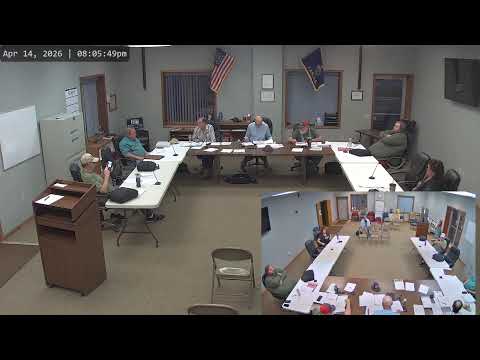
The Linn County Planning and Zoning Committee spent a workshop reviewing redline drafts of proposed energy and infrastructure zoning regulations that would limit water use, tighten safety requirements for battery energy storage systems and, in draft language, require large facilities to generate their own electricity.
The discussion centered on three practical levers: cooling systems and water consumption, safety and code compliance for battery systems, and whether to require on-site electrical generation. The committee asked staff to clean up definitions, add missing UL and NFPA references and return with a revised draft for public notice and committee vote.
Members reviewed language that would require large technical facilities to use closed-loop liquid cooling with dry-cooler rejection technology so the cooling medium remains fully contained. A committee member urged that “any coolant removed from the closed loop system must be tested and disposed of in accordance with state and federal laws,” and the group agreed to add a requirement for testing and disposal tied to state and federal standards.
On safety standards, the committee discussed adding or relocating code references. Members recommended including UL 9540 and UL 9540A for battery energy storage systems, and ensuring NFPA 70 (National Electrical Code), NFPA 72 (fire alarm systems) and NFPA 30 (flammable and combustible liquids) were referenced where applicable so code compliance reports would be available to the fire marshal on request. Committee discussion repeatedly returned to NFPA 855, the technical standard for battery energy storage systems; the draft currently lacks a dedicated BESS section and the committee asked staff to create or point to one that covers thermal-runaway protection, container separation, alarms and firefighting considerations.
Committee members also debated whether the draft should contain a hard percentage for on-site generation. The current draft language reads that the applicant “shall provide on-site electrical generation capacity capable of supplying not less than 100% of the facility’s maximum electrical demand.” Some members suggested lowering that threshold; others warned that regional grid constraints and federal guidance make the question complex. The committee instructed staff to research federal guidelines and return with options before adopting any firm percentage.
The group discussed removing a proposed 10,000-gallon-per-day water threshold and instead focusing on requiring closed-loop systems for high-intensity users. Members raised the possibility that strict water or power requirements could deter investment; others said strong standards are necessary to protect groundwater and public resources. Committee members repeatedly emphasized that the committee itself recommends but that county commissioners make the final decision on CUPs (conditional use permits).
On decommissioning and site repurposing, members proposed a short, clear requirement: applicants must supply a decommissioning or repurposing plan as part of their CUP submission and, for projects on leased land, provide financial assurance (a performance or insurance bond) to guarantee site restoration if the facility is removed. The committee sought clarity on when a repurpose plan suffices and when full site restoration is required.
Next steps: staff will revise the draft to insert the missing UL and NFPA references, add a battery-energy-storage-specific subsection or pointer to NFPA 855, refine coolant-disposal language to cite state and federal disposal laws, research applicable federal guidance on on-site generation percentages, and recirculate the redline before scheduling a public hearing and a committee vote.
The committee also convened briefly in regular session to approve the March 31 minutes by voice vote and then returned to the workshop to continue the zoning discussion.