Get Full Government Meeting Transcripts, Videos, & Alerts Forever!
Get email alerts on the Enrollment Capacity topic
No spam. Unsubscribe anytime.
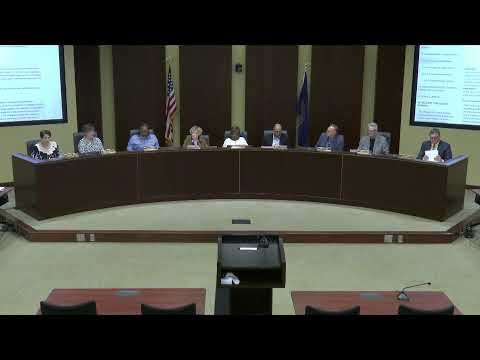
Lincoln Public Schools hears warning on falling kindergarten enrollments; several elementary schools over capacity
Summary
District staff told the board April 14 that kindergarten enrollment has declined in line with Lancaster County and national birth-rate trends and recommended monitoring several elementary schools that are over 100% utilization without portables, with boundary review and continued cohort-based projections planned.
Liz, a district planning presenter, told the Lincoln Public Schools Board on April 14 that kindergarten enrollment is "always a question mark" and that the district's cohort-based projections show a small decline in total enrollment "from just over 40,000 to just over 39,000." She said the trend mirrors birth-rate and migration patterns for Lancaster County and the city, not a district-specific anomaly.
The presentation identified Brownell, Kahoots, Kooser and Lakeview elementary schools as operating above 100% utilization without portables. "We want to evaluate capacity without the use of portables," Liz said, noting that portables are a useful short-term tool when neighborhoods experience rapid student growth but that the planning committee prefers neighborhood-serving solutions where possible.
District staff outlined the factors used to assess capacity: number and size of classrooms, classroom types and uses, program placement and student needs. Liz said the assessment team uses enrollment projections based on current cohorts and cautioned that kindergarten declines of roughly "15 to 20 students between that fifth grade to kindergarten" scaled across years could materially lower enrollment at affected schools.
The planning committee's near-term recommendation is continued monitoring of elementary and middle school enrollment, with boundary and program-placement reviews if utilization crosses board policy thresholds (the committee triggers a "deeper dive" if utilization moves below or above 15% of target). Liz said the committee will request a review of high school boundaries next year as portables are added at some high schools.
Board discussion included questions about how the district will evaluate curriculum and outcomes as enrollment and instructional changes unfold. Liz said staff will look at multiple measures — MAP, AQuESTT and elementary report cards — as part of continuous curriculum and capacity planning.
The planning committee did not propose immediate boundary changes; instead, it recommended regular monitoring and a return to the board with further analysis if trends continue.