Get Full Government Meeting Transcripts, Videos, & Alerts Forever!
Get email alerts on the State Funding topic
No spam. Unsubscribe anytime.
Blue Springs R‑IV leaders warn state bills, grading changes could cut district funding
Summary
Board members and the superintendent warned that pending Missouri bills — including property‑tax proposals and an A–F grading push — could deepen an already projected state funding shortfall and shift resources to private schools, and urged residents to contact legislators.
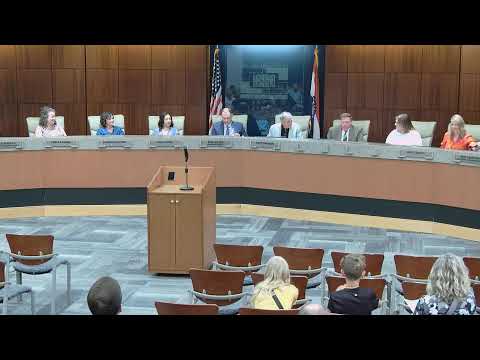
Blue Springs R‑IV school leaders used the district’s April board meeting to press local residents and lawmakers to monitor and respond to several state bills they say threaten public‑school funding.
Mr. Wolf, the district’s legislative liaison, listed multiple measures before the legislature that could affect district revenue, including property‑tax proposals (House Bills 2780 and 3035; Senate Bills 1066 and 1410; SJR 111) and education bills affecting grading and literacy policy. He told the board the state faces a large funding shortfall and that transportation and other categorical funding are at risk: “we are looking at a total across the state of almost $479 million in losses in funding,” he said.
Board members amplified that concern. Miss Swank said she was struck that House Bill 2012 — which she said increases funding for private schools — has passed both chambers while public‑school formula funding is decreasing. “It dawned on me that House Bill 2012 has already passed the House and Senate and is waiting for the governor to sign. That bill increases funding for private schools,” she said, and asked whether private schools should be held to the same accountability as public schools.
Miss Swank and other board members criticized proposals to impose an A–F grading system on schools and a separate bill (discussed as HB2872) that would mandate automatic retention of third‑grade students based on a literacy screener. They argued the measures risk penalizing schools without addressing root causes and could create unfunded mandates. “To sit there and to put a grade on each one of those schools … is very concerning,” one board member said. The board noted the potential operational impact of a mandatory retention policy, including the need for additional staff, classroom space and funding to run intensive acceleration programs.
Superintendent Dr. Jerome summarized the district’s fiscal exposure, explaining that recent assessments and county actions could reduce local revenue streams and that the district can only absorb those losses for a limited time. “We have a good fund balance. We can weather the storm for a couple years, but we are going to need the community’s help,” he said.
Board members urged parents and residents to contact state representatives and senators, to review the district’s publicly posted budget work‑session materials, and to join scheduled visits to Jefferson City to press for funding and restraint on unfunded mandates. The board said it will continue monitoring the bills and coordinating visits with local legislators.