Get Full Government Meeting Transcripts, Videos, & Alerts Forever!
Get email alerts on the Senior Trip topic
No spam. Unsubscribe anytime.
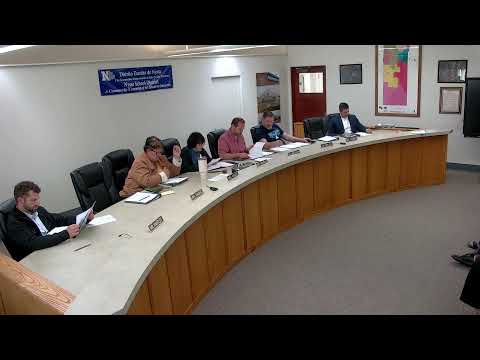
Nyssa School Board approves up to $5,000 to support 2026 senior trip, sets fallback if charter is infeasible
Summary
The Nyssa School Board voted April 13 to provide up to $5,000 to help fund the 2026 senior trip, with a caveat to develop a formal policy and a contingency to supply district buses and drivers if a charter cannot be arranged.
Nyssa School Board members voted April 13 to approve up to $5,000 in district support for the 2026 senior trip after hearing from student leaders and staff about rising charter costs.
Julie moved "to fund up to $5,000 for the trip with the caveat that we come back and make a policy of how much we'll do annually," and a board member seconded the motion. The motion also included a fallback: if charter arrangements could not be made within that amount, the district would provide two buses, a driver and related hotel and fuel costs. Board members signaled approval by raised hands and the motion carried by voice/hand vote.
The high-school student government reported strong fundraising — the ASB said the class had raised roughly $10,000 toward the trip — but members said a charter quote reported during the discussion was near $10,000, leaving uncertainty about whether that would cover tickets, food and other expenses. Board members who supported the district contribution said a one‑time supplement would allow the class to keep its plan and protect students’ safety on a long overnight trip.
Several trustees also pressed for a durable approach for future years, saying the district should adopt a standard policy that spells out maximum district support so expectations are clear for successive classes. "If we say this is usually where we're at with it, then they can hit that target or choose not to," one trustee said during deliberations.
The board directed that, if the charter proves infeasible within the $5,000 cap, staff should use district transportation (two buses) and drivers so students are not left without travel options. The board did not record a roll-call tally; minutes note the motion carried.
Next steps: staff will return with the policy recommendation and any budget adjustments necessary to implement the approved support or the district-bus fallback.