Get Full Government Meeting Transcripts, Videos, & Alerts Forever!
Get email alerts on the Cybersecurity topic
No spam. Unsubscribe anytime.
FBI Seattle Field Office outlines four 'Winter Shield' defenses for everyday users
Summary
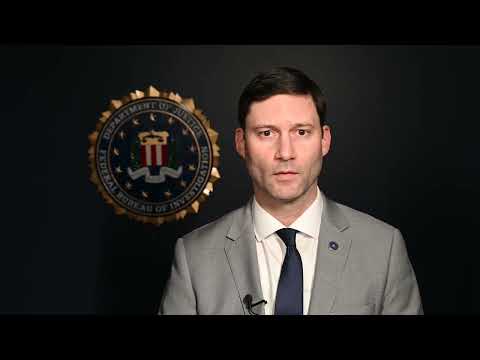
Mike Herrington, special agent in charge of the FBISeattle Field Office, summarizes four practical defenses from the FBIOperation Winter Shield guidance for individuals: stronger email protections, securing internet-facing devices, limiting admin privileges and practicing response plans. The video directs viewers to fbi.gov/wintershield for the full guide.
Mike Herrington, special agent in charge of the Federal Bureau of Investigation(FBI) Seattle Field Office, summarized four practical cybersecurity defenses individuals can use in the FBIOperation Winter Shield outreach series. The video, aimed at non-IT users and households, focused on email protections, identifying and protecting internet-facing systems, reducing administrator privileges and exercising response plans.
Herrington said the measures are part of the FBIOperation Winter Shield guidance for individuals and small organizations and are intended to make common attacks harder to succeed. "These actions encapsulate key cybersecurity fundamentals that organizations and individuals should apply on a regular basis to keep their networks and information secure," he said.
On email, Herrington advised using a disposable or single-purpose "burner" email for activities that might expose an address, so the primary account is less likely to be leaked in a breach. "You can use a disposable or single-purpose burner email," he said, adding the usual caution: be wary of phishing and avoid clicking links or opening attachments unless you are absolutely sure they are safe.
For internet-facing systems, Herrington recommended that organizations map public IP space and disable direct remote desktop access. For home users he urged checking router settings, disabling Universal Plug and Play (UPnP), and changing the default Wi-Fi name or SSID. "Ensure Universal Plug and Play is turned off... Never leave your home Wi-Fi name or SSID as the default," he said, noting that UPnP can open ports automatically and create exposure.
Herrington explained the principle of least privilege as a defense against malware: limit permanent administrative rights and use non-administrative accounts for daily activities. He advised individuals to create two accounts on personal computers—one standard account for everyday use and one administrative account only for installing apps—so accidental clicks are less likely to allow malware installation.
On response planning, Herrington recommended quarterly tabletop simulations for organizations and a short, practical "what-if" drill for individuals. He suggested asking simple questions such as, "If my phone was stolen right now, how would I lock it? Can I access my bank accounts? Do I have my password written down to access my email without my phone?" He also noted password managers and multi-factor authentication as tools to restore access quickly.
Herrington closed by encouraging viewers to make these practices routine and directing them to the FBIwebsite for more detail: "Once again, visit fbi.gov/wintershield to learn more and to see the rest of our 10-step guide to safeguarding your information," he said. The video is an advisory resource rather than a regulation or law; viewers seeking organizational rules should consult their IT or legal advisers.
The FBI Seattle Field Office provided the guidance as part of its public outreach; the video did not announce new enforcement actions or legal changes.