Get Full Government Meeting Transcripts, Videos, & Alerts Forever!
Get email alerts on the Immigration Policy topic
No spam. Unsubscribe anytime.
Ulster County legislature adopts policy limiting warrantless federal immigration actions on county property
Summary
The committee passed Resolution 189 to convert a 2019 executive order into county policy that bars warrantless entry to non-public county areas, bans staging on county property and restricts county employees from sharing non-public information for immigration enforcement; the measure contains no internal disciplinary penalties and relies on the county executive for operational enforcement.
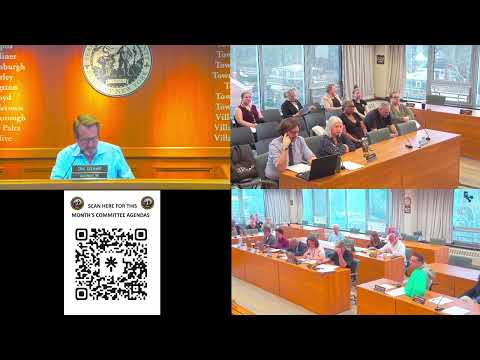
The Ulster County Legislature’s Health, Human Services and Human Rights Committee on April 14 approved Resolution 189 to establish a county policy restricting certain federal immigration-enforcement activities on county property.
The policy, sponsored by Legislative Chair Peter Kriswell, prohibits warrantless entry to non-public areas of county buildings, bars federal authorities from using county property as staging areas, and prevents county employees from sharing non-public information for immigration enforcement purposes. Kriswell said the text codifies a 2019 executive order issued by then-County Executive Pat Ryan and has been reviewed by the county attorney’s office and the sheriff’s attorneys.
Kriswell said the change is intended to make the previous executive action permanent through legislation rather than an executive order that could be changed by a future county executive. “This isn’t anything particularly new or radical to our county,” he said, adding that it had been “thoroughly vetted” by legal and law‑enforcement counsel.
Committee members pressed the sponsor on enforcement. Deputy Chair Lopez asked whether the resolution prescribes disciplinary steps for employees who ignore the policy; Kriswell and Deputy Executive Amenta said the resolution sets policy and that operational consequences would fall to the county executive’s administration. “There is no set enforcement mechanism in this resolution itself,” a presenter said, adding that infractions could be noted and potentially cited in litigation but that disciplinary processes would be implemented by the executive branch.
Several legislators stressed that the policy does not impede federal agents who present a judicial warrant. “If federal immigration has a judicial warrant, they can certainly do that,” Kriswell said. The discussion also covered the difference between administrative and judicial warrants and how the county will handle requests under the Freedom of Information Law (FOIL).
Legislator Collins framed the policy as leveling the playing field: federal agents would be required to go through the same judicial processes as other requesters when seeking nonpublic county records or entry. Deputy Executive Amenta and counsel said county practice is to require judicial subpoenas for many categories of county documents and that this policy would reinforce relying on judicial process rather than administrative warrants.
Legislator Kovac asked whether union leadership had been consulted; Kriswell said the county attorney had reviewed the language and had not found legal issues but deferred operational concerns to the executive office. The committee received additional operational comments from Deputy Executive staff who said county employees had been asking for clearer direction on how to respond if federal agents sought access to county property.
After extended discussion the committee moved and approved Resolution 189. The resolution passed at the committee level; committee discussion indicated the committee expects the county executive to implement operational procedures if the policy is adopted by the Legislature.
Next steps: the resolution will advance in the legislative process. The resolution text does not list internal disciplinary penalties; committee members noted that operationalization, including any staff discipline or internal enforcement mechanisms, would be developed by the county executive’s office if the policy is adopted at the legislative level.