Get Full Government Meeting Transcripts, Videos, & Alerts Forever!
Get email alerts on the Emergency Services topic
No spam. Unsubscribe anytime.
Ventura dispatchers explain how 911 and text-to-911 work and urge callers to ‘know your location’
Summary
Two San Buenaventura (Ventura) police dispatchers describe how calls are triaged, why dispatchers confirm location first, how location accuracy varies, and why text-to-911 should be reserved for situations when callers cannot speak.
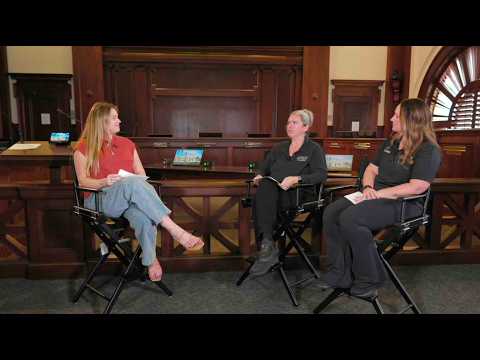
Malia, a Ventura police public safety dispatcher and floor supervisor, and Aaron, a Ventura police public safety dispatcher, told listeners during a Ventura Voices podcast that the most important thing a caller can do in an emergency is give a clear location and communicate what they can observe.
"We can't help you if we don't know where you are," Malia said, explaining that confirming latitude and longitude is the first question dispatchers ask because jurisdictions and the right responding agency can change based on location.
The dispatchers outlined how calls are triaged: location first, then the nature of the emergency and whether anyone is injured. Aaron said the center uses automated location tools (referred to on the episode as "Annie and Ali") that can, depending on phone type and signal, produce accuracy ranging from roughly 5 meters to a broad radius of about 1,700 meters. That variance, they said, is why dispatchers repeatedly confirm where a caller is and sometimes ask for nearby landmarks.
They described what dispatchers do behind the scenes. On a typical shift a small team—three to six people, depending on hours—mans multiple radio frequencies and phone lines, monitors camera feeds and officer locations on maps, and does on-the-fly background checks for addresses or phone numbers to give officers context before arrival. "We're always three steps ahead," a dispatcher said, describing how the center identifies the closest available unit rather than relying solely on routine beat assignments.
The podcast included recorded 911 calls to illustrate how dispatchers work under pressure. In one example presented as a possible burglary, the dispatcher kept the caller focused on describing what was happening while officers were en route; the case later proved unfounded. In another example, a calm parent reporting a missing 6-year-old with Down syndrome provided descriptive details that helped responders find the child quickly.
The episode also covered common public misperceptions. Speakers said callers sometimes misuse legal terms such as "robbery" and "burglary," which are helpful only if accompanied by specific observations. They urged people not to hesitate to call 911 if they feel an immediate safety risk: "If you don't know where you are, call 911 because at least we have a starting point," Aaron said.
On text-to-911, the dispatchers urged restraint. The county system accepts text messages but not photos or video; texting can introduce delays and often requires follow-up questions that are faster handled by voice. They recommended texting only when a caller cannot safely speak or is speech- or hearing-impaired.
Dispatchers also addressed public perceptions that call-takers are "rude." They framed interruptions and brisk questioning as necessary triage under high stress: the center needs concise, actionable information to ensure caller and officer safety. The panelists described the emotional toll of repeated exposure to traumatic calls and said peer support and access to outcome information help staff process incidents and get closure.
The dispatchers closed with practical tips: know your address or where you are, teach children to memorize key contact information, describe observable details (colors, clothing, nearby businesses), and use text-to-911 only if you truly cannot speak. For more information, they directed listeners to the Ventura Police Department website at venturapd.org.
The episode did not include any formal actions or policy changes; it was educational in focus and intended to improve public understanding of local emergency response.