Get Full Government Meeting Transcripts, Videos, & Alerts Forever!
Get email alerts on the Transportation topic
No spam. Unsubscribe anytime.
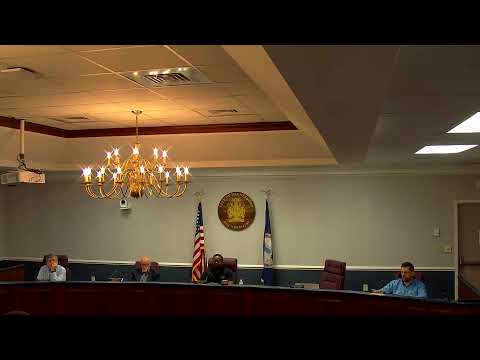
Waynesboro council tables VDOT plan to cut Broad Street to one lane each way after safety presentation
Summary
VDOT proposed converting Broad Street from two lanes each way to a single travel lane in each direction with a center turn lane, buffered bike lanes and targeted medians to address a five‑year crash history. Council asked for more analysis and public input and voted to table the resolution until April 27 (4-0, one abstention).
VDOT presented a revised safety-focused design for the 1.3-mile Broad Street corridor on April 13, proposing a lane reconfiguration that would reduce general traffic to one lane each direction, add a center turn lane and provide wider, buffered bike lanes.
Brad Reed, a VDOT representative, told the council the proposal is intended to address corridor crash patterns: "In the five-year period we looked at, there was 137 crashes," he said, adding that many crashes occur at intersections and that a single‑lane approach shortens pedestrian crossings and creates adequate bicycle lanes. Reed said intersection-level modeling with conservative future-volume assumptions showed the intersections would operate acceptably in peak hours.
Council members raised operational and community‑input concerns. One councilor urged more public feedback before changing four travel lanes to two: "For 20 a year ... I would be wanting to get more feedback from the community," said a council member during the discussion. Several members asked VDOT to refine assumptions about future traffic growth and to return with additional intersection modeling, bicycle/pedestrian crash comparisons, and a clearer threshold for when a single‑lane configuration is appropriate.
Council then voted to table consideration of the resolution until April 27 so staff and VDOT can provide additional analysis and more community outreach. The motion to table carried 4-0 with one abstention by Councilor Short, who said he would abstain because he is an employee of VDOT.
What happens next: VDOT and city staff will refine the design details, run additional operations and multimodal crash analyses requested by council, and schedule further public outreach before the council considers the revised scope again.
Why it matters: The corridor links retail and civic destinations and carries roughly 10,000–12,000 vehicles daily today; VDOT's presentation said that level and intersection crash patterns make lane reconfiguration a commonly used tool for improving safety and bicycle accommodation in similar localities.