Get Full Government Meeting Transcripts, Videos, & Alerts Forever!
Get email alerts on the Energy Aggregation topic
No spam. Unsubscribe anytime.
Committee approves city participation in SOPEC aggregation with annual review and added utility oversight
Summary
After questions about pricing, opt-outs and consumer outreach, the Utilities Committee approved Ordinance 406-2026 to participate in the SOPEC electric aggregation program, amending the measure to require annual legislative authority for renewals and to add the Director of Public Utilities to implementation roles.
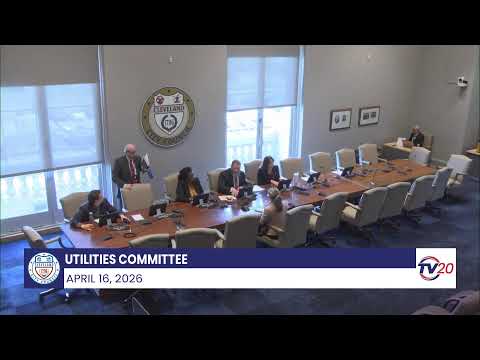
The Cleveland City Council Utilities Committee on April 16 authorized the city to participate in the Sustainable Ohio Public Energy Council (SOPEC) electricity aggregation program for eligible First Energy (Illuminating Company) residential and small commercial customers, approving Ordinance 406-2026 as amended.
Director of Sustainability described aggregation as a municipal program that combines many First Energy customer accounts to negotiate fixed supply pricing and to offer a default 100% renewable-energy tier. She told the committee that six certified aggregators responded to the city's RFP and that final competitive pricing is not locked in yet because indicative pricing opens in June; the city sought authorization now to avoid a lapse in service during the August 2026 meter-read cycle.
Officials said the program’s administrative fee to implement SOPEC is 0.2 of a cent per kilowatt-hour; based on historical Cleveland aggregation of about 390 million kWh, that fee would amount to roughly $780,000 annually paid by participating customers. Director of Sustainability said SOPEC’s prior cycles saved Cleveland customers nearly $21 million compared with the First Energy standard offer, a comparison she framed as the program’s benefit to participants.
Council members asked detailed questions about eligibility and tier options (the default enrollment is the 100% renewable tier, with two lower-cost tiers available by opt-in), protections for customers already in assistance programs or active contracts, and how much the default renewable tier costs relative to First Energy’s price-to-compare (cited in committee as 9.88 cents per kWh). The director said the current locked-in SOPEC rate cited for comparison is about 9.236 cents per kWh and that the program limits price changes to no more than once per 12 months in the contract.
Several members asked for consumer outreach materials to counter confusing private marketing and to help customers understand opt-outs; the director committed to prepare boilerplate materials in coordination with the Department of Public Utilities and council staff.
To ensure legislative oversight, the committee approved amendments to structure the ordinance as an initial period of up to one year with two one-year renewal options that require legislative authority before each renewal and to add the Director of Public Utilities alongside the Director of Finance in the ordinance language so the Department of Public Utilities is engaged in program implementation. The ordinance, as amended, passed the committee.
Next steps: letters and enrollment notices were described as planned for June pending final pricing; Office of Sustainability and DPU will provide enrollment/eligibility data and outreach materials prior to implementation.