Get Full Government Meeting Transcripts, Videos, & Alerts Forever!
Get email alerts on the Data Centers topic
No spam. Unsubscribe anytime.
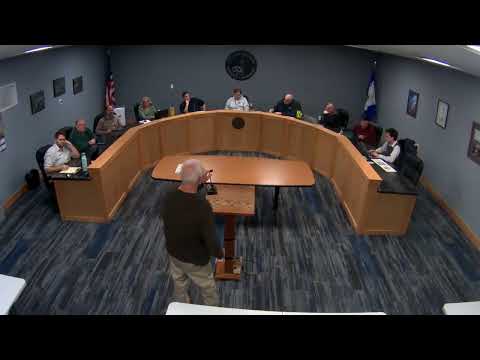
Commission discusses data-center zoning memo; staff to continue research, no formal action
Summary
Commissioners held a round-table discussion of a staff memo on how Kasson City could regulate data centers (definitions, districting options, CUPs, PUD overlays, performance standards) and raised concerns about potential power and water impacts; no ordinance or vote was taken.
Commissioners held an extended round-table discussion on a staff memo outlining zoning options and policy questions for potential data center development. Staff characterized the memo as high-level background intended to identify regulatory choices—district designation, conditional use permits, overlay districts, and performance standards such as noise, screening and energy/water requirements—if a data center proposal were to appear.
Staff noted data centers range widely in scale, from very small (100 sq ft or portable/curtailable operations) up to hyperscale campuses that can exceed one million square feet; for a community the size of Kasson City staff said hyperscale campuses are unlikely but small to enterprise-scale facilities (roughly 5 to 20 megawatts) are conceivable. "I don't think it's realistic to expect a million-dollar campus in Kasson," a staff member said, while also warning that even smaller facilities can present substantial electric load that would need negotiated infrastructure upgrades.
Discussion topics included on-site generation and backup power (diesel generators versus batteries), the tradeoff between closed-loop cooling (lower water use but different noise/energy profiles), and whether zoning should require CUP review or a PUD/overlay to set site-specific conditions. Staff referenced examples where jurisdictions negotiated infrastructure contributions (for example, a water tower payment tied to a data center elsewhere) as models for mitigating capital burdens.
Commissioners and staff emphasized they were not prescribing a policy yet but wanted to be prepared. One staff member recommended studying options now so the city would not be caught unprepared if applicants arrive. "We want to get out ahead of it because I do think that we want to be prepared if it does come," a commissioner said.
There was no public hearing and no formal action; staff will continue to evaluate zoning strategies and return to the commission with more refined proposals if and when specific projects or stronger policy recommendations emerge. The commission noted that a public hearing would be appropriate once staff has drafted ordinance language or a specific project application.
Sources: staff memo and commission discussion during the Kasson City Commission meeting.