Get Full Government Meeting Transcripts, Videos, & Alerts Forever!
Get email alerts on the Zoning Childcare topic
No spam. Unsubscribe anytime.
Commission recommends allowing accessory child care in non-residential zones, requires conditional use review
Summary
The commission voted to recommend a zoning text amendment that would allow child care facilities as accessory uses to non-residential principal uses—subject to conditional use permitting—after SEMAC described plans to consolidate Head Start, a food shelf and senior dining into the former Opportunity Services building.
The commission voted to recommend that the Kasson City Council adopt a zoning text amendment to allow child care facilities as accessory uses in non-residential zoning districts, with each proposal subject to a conditional use permit review.
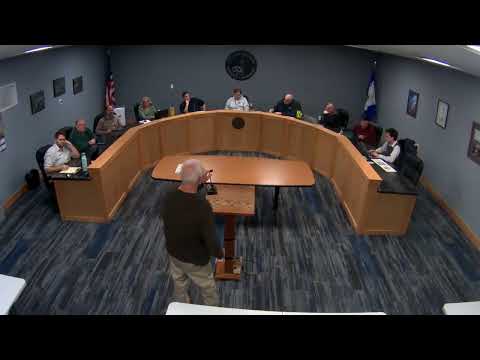
At a public hearing, SEMAC executive director Jennifer Hangel described the nonprofit's plan to consolidate an outreach center, food shelf, senior dining program and Head Start classroom into the former Opportunity Services building at 2025th Street Southeast. Hangel said Head Start must meet federal and state licensing standards, including roughly "35 ft of indoor space per child" and "75 square ft of outdoor space per child," and said the program typically enrolls about 15 children in a room licensed for up to 18.
The amendment responds to staff analysis that Head Start does not clearly fit the city's existing definition of social assistance, welfare and charitable services, creating a regulatory gap for accessory early-childhood programs colocated with nonprofit services. Staff recommended a text change to make accessory child care expressly allowable in commercial and industrial districts only after an applicant obtains a conditional use permit (CUP), so the city may review site-specific compatibility, screening and operational requirements.
Supporters at the hearing argued the building is already configured for social services and that consolidating services will improve efficiency and continuity of care. "It's set up just right for our purposes," said SEMAC executive director Jennifer Hangel, describing plans for on-site coordination of nutrition, health and family support services.
Opponents and other residents asked about fiscal and land-use consequences. Ron Carlson, the owner of a building currently leased by the applicant, said converting property to nonprofit use could remove roughly "$23,000 a year" in property taxes for the city and urged commissioners to consider the tax impact. Other speakers said a citywide text amendment could have wider consequences for industrial and commercial parcels.
Commission discussion centered on whether allowing accessory child care in I1 (light industrial) and other non-residential zones would unintentionally create compatibility problems if future adjacent uses (for example, labs, contractor yards, or industrial storage) located next door. Staff listed I1-allowed uses including breweries, labs, rental storage units, light manufacturing and auto repair; commissioners noted those uses can sometimes require buffering or operational controls.
Multiple commissioners said the CUP process provides necessary site-by-site review to address compatibility. One commissioner summarized the action: "I'll make a motion to recommend to city council the amendments provided to us by staff." The motion was seconded and passed on a voice vote; the commission's recommendation will be forwarded to the Kasson City Council for final action.
Next steps: the city council will consider the staff-recommended text amendment and the commission's recommendation at a future council meeting. If the council adopts the amendment, each applicant seeking to operate a child care accessory use in a non-residential district would still need to apply for and obtain a CUP that addresses site layout, screening, drop-off/pick-up, play area location and other compatibility measures.
Sources: public hearing testimony and staff presentation at the Kasson City Commission meeting.