Get Full Government Meeting Transcripts, Videos, & Alerts Forever!
Get email alerts on the Great Lakes Restoration topic
No spam. Unsubscribe anytime.
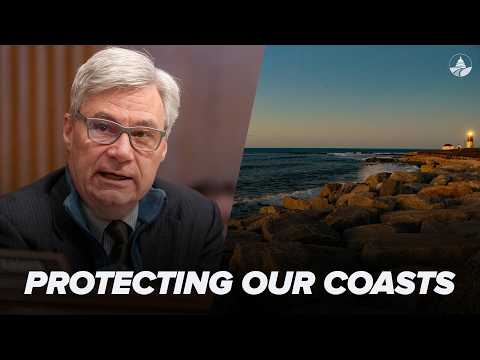
Senate EPW hearing urges reauthorization of Great Lakes Restoration Initiative
Summary
Witnesses at a Senate Environment and Public Works hearing urged reauthorization of the Great Lakes Restoration Initiative (GLRI), citing on‑the‑ground projects—wetland restoration, invasive‑carp protections and public engagement—that they say have reduced nutrient loads and improved habitat. Senators and witnesses called for continued funding stability and greater transparency in federal allocations.
The Senate Environment and Public Works Committee heard testimony urging reauthorization of the Great Lakes Restoration Initiative, with witnesses describing projects that they said have reduced nutrient runoff, protected fisheries and bolstered coastal habitat.
Senator Husted, the committee’s Great Lakes member, introduced the hearing as an opportunity to explain why GLRI matters to states that border the lakes and to urge congressional action on S.528, the GLRI Act of 2025, whose supporters say would reauthorize the program before its current authorization expires at the end of September. "I will continue to fight for its reauthorization," Husted said, casting the initiative as a federal commitment to the lakes, the water and regional economies.
Ohio Department of Natural Resources Director Mary Mertz described three GLRI‑supported efforts in Ohio. She said the state and federal partnership rebuilt two islands in the Maumee River to slow flow and filter phosphorus, a project she put at $13 million, including about $5.5 million in GLRI funds and roughly $8 million in state dollars. Mertz also described work to sever four waterway connections at medium risk for invasive carp, and a student engagement program that has reached an estimated 14,000 middle and high school students. "We see its value every single day," she said, urging senators to reauthorize GLRI.
Dr. Christopher Winslow of Ohio State’s Sea Grant and Stone Laboratory said GLRI’s value comes from a systems approach that links federal funds to local implementation, monitoring and applied research. He listed GLRI’s core priorities—areas of concern, invasive species, non‑point pollution, habitat and monitoring—and said coordinated projects and agricultural practices supported by GLRI have helped reduce nutrient loads to Lake Erie by about 8 percent (as presented in testimony). "GLRI works because it aligns people, resources, and expertise towards solutions," Winslow testified.
Holly Bamford of the National Fish and Wildlife Foundation said NFWF has been a core implementing partner for GLRI and reported that, over two decades, her foundation has awarded about $140 million across 530 Great Lakes projects and helped reconnect more than 2,600 miles of streams and restore nearly 60,000 acres of habitat. She warned that demand for coastal resilience funding far outstrips supply: the National Coastal Resilience Fund has received roughly $3.8 billion in requests, and NFWF funds less than 20 percent of that demand.
Committee members pressed witnesses on coordination and funding allocation. Director Mertz said state–federal relationships are "foundational" but asked for greater transparency about how GLRI funds are distributed among the many federal agencies that implement projects. Senators and witnesses also emphasized the ongoing threat of invasive Asian carp and the need to advance barrier and removal projects at prioritized connections, including high‑profile sites discussed by the states and federal partners.
Testimony cited several concrete outcomes and metrics: more than 20,000 acres of wetlands created, restored or enhanced through Ohio’s H2Ohio program (Mertz); an estimated 60,000 pounds per year of phosphorus reduction tied to Maumee River wetland work; a $13 million island restoration with GLRI and state funding; and 14,000 students reached by outreach programs. Senators and witnesses repeatedly urged continued GLRI funding stability and recommended better interagency transparency to avoid duplicative federal spending and to improve planning.
The committee did not take any formal votes at the hearing. Senators may submit written questions for the record by 5:00 p.m. on Wednesday, April 29; witnesses’ written responses are due by 5:00 p.m. on Wednesday, May 13.
(Reporting based on testimony at the Senate Environment and Public Works Committee hearing on the Great Lakes Restoration Initiative, including oral statements by Mary Mertz, Christopher Winslow and Holly Bamford.)