Get Full Government Meeting Transcripts, Videos, & Alerts Forever!
Get email alerts on the Fire Marshal And Equipment topic
No spam. Unsubscribe anytime.
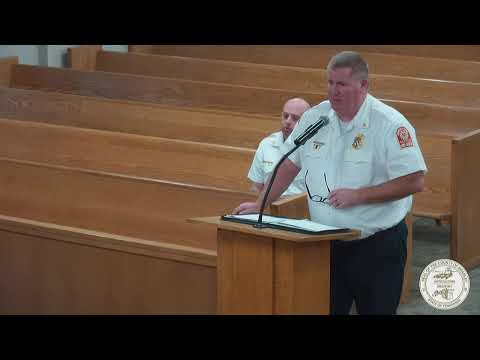
Bradley County commissioners press fire chief on creating full‑time fire marshal, equipment priorities in budget talks
Summary
At a Finance Committee budget hearing, Chief Stewart said the county’s fire marshal is part‑time and handles inspections, investigations and prevention; commissioners disputed the need and cost of a full‑time marshal and probed staffing, equipment orders and ISO readiness.
Bradley County’s Finance Committee questioned the county fire chief on Wednesday about a budget request to create a full‑time fire marshal position, equipment needs and staffing shortfalls.
Chief Stewart told the committee the county currently has a part‑time fire marshal, Michael Baker, who conducts all county fire inspections, prepares pre‑plans for commercial sites (including churches), runs the smoke‑alarm program and carries out fire investigations. "We are three short," Stewart said when asked about staffing, and he noted the current rookie class is "at week eight of 12. They'll graduate May 15."
The chief said the marshal role is largely an expense: "The only thing we do get in is on our fire prevention for all of our school systems. We get around $7,000 for that," which he characterized as separate from general taxpayer revenues. He also said certified fire marshals "do have the authority to issue citations" when they are properly post‑certified, though burn‑law citations are usually handled by state forestry.
Commissioner Alford, who raised the budget line for a formal fire marshal, asked for specifics about the position's duties and whether the role would carry "teeth" such as citation authority. "If we're going to do a fire marshal, they need to have the ability to do citations," Alford said. Chairman Crye expressed skepticism about creating a full‑time position while annexation by the city reduces county service territory and could increase fire‑tax burdens for rural residents.
Committee members also pressed the chief on operational details. Chief Stewart said the marshal works with Bentley Thomas in the county building inspection office and would be one of the signatures on plats for county development. He estimated the county has roughly 500 commercial businesses requiring inspections, and he said the marshal's workload — including training and continuing education requirements — has been heavy for a single, part‑time employee.
On equipment, Stewart said the department has been updating communications gear: mobile radios previously equipped in about 45 vehicles have been reduced to roughly 36, with seven radios purchased in the 2024‑25 budget. He cited an approximate mobile radio unit cost of $2,700 each. Mayor Davis told the committee that several requested items are already on order (extrication tools, fire hose, a reporting system, tablets, mobile radios and rescue helmets) and that a recent grant of $10,000 will cover about half the cost of turnout gear; Stewart said a skid unit and some additional turnout gear remain to be addressed.
When asked to choose between purchasing a command vehicle or a brush truck if only one were possible, Stewart said the department would prefer a brush truck. The mayor also warned that currently available revenue would not support proposed 20% pay raises for multiple departments: "20% raises is not going to make it with the existing revenue," he said.
Commissioner Collins raised questions about the pay‑scale structure and upward mobility for firefighters, asking whether long‑tenured firefighters could become stagnant without promotion to engineer or lieutenant. Stewart confirmed that firefighters can be promoted to engineers and acknowledged retention and compensation are ongoing concerns.
Stewart highlighted the role marshal duties play in preparing for the Insurance Services Office (ISO) rating, explaining ISO’s three components (water, 911 and fire department) and saying the marshal’s inspections, pre‑plans and investigations account for a material portion of the fire department score. The committee was told the next ISO evaluation is not due until about 2028, offering some runway to address deficiencies.
The hearing concluded with commissioners thanking Chief Stewart and staff for their work; no formal vote or motion was taken on the fire marshal position during the session. The committee’s next meeting is scheduled for May 4, 2026, when it will return to the current budget.