Get Full Government Meeting Transcripts, Videos, & Alerts Forever!
Get email alerts on the Coolidge Economic Policy topic
No spam. Unsubscribe anytime.
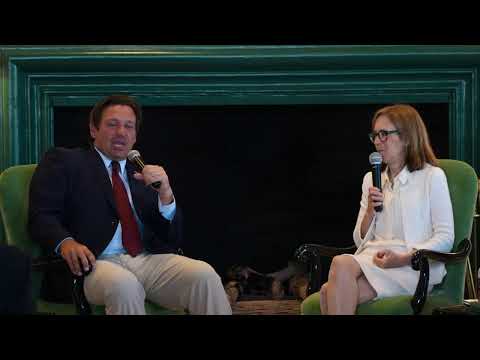
Historian Amity Shlaes and Gov. Ron DeSantis praise Calvin Coolidge's fiscal restraint and link it to modern Florida policy
Summary
At a Coolidge Foundation event, Amity Shlaes argued that New Deal interventions lengthened the Depression while Gov. Ron DeSantis and panelists praised Coolidge's tax and budget approach, linking those ideas to Florida's low-tax, low-staffing model and recent migration-driven philanthropy.
Amity Shlaes, author and president of the Coolidge Foundation, told attendees that historians should reassess Calvin Coolidge's record and consider the economic consequences of large-scale government intervention. "The New Deal didn't work," Shlaes said, arguing that repeated experimentation and intervention prolonged double-digit unemployment in the 1930s and harmed the "forgotten man" who ultimately pays for programs.
Governor Ron DeSantis joined the discussion, praising Coolidge's restraint and using the historical account to defend contemporary Florida policy. DeSantis pointed to state choices including a lack of a state income tax and fewer state employees per capita, saying those decisions have helped attract incomes and philanthropic gifts to Florida. "We have the lowest number of state government workers per capita in the entire United States of America," he said, and attributed large philanthropic inflows to migration of wealthy residents.
Shlaes traced her argument to William Graham Sumner's framing of the "forgotten man," contending that well-intended programs can coerce other citizens to subsidize costly projects. She emphasized differences between Coolidge, Hoover and Roosevelt, noting Coolidge left office before the 1929 crash and criticizing some Hoover-era interventions such as measures that sought to constrain short selling and policies that pressured businesses to keep wages high during downturns.
Both speakers highlighted Coolidge-era fiscal measures: lower top marginal rates, an effectively lower capital-gains rate, and the Budget and Accounting Act of 1921. Shlaes said the 1926 Revenue Act's retroactive tax cuts made Coolidge particularly popular and cited the combination of tax reductions and spending restraint as hallmark policies.
The pair also discussed modern implications. DeSantis argued that threats of heavier taxation in other states (he cited proposed wealth taxes) can drive out residents and capital, freeing Florida to receive philanthropic donations and business relocations. Shlaes urged attention to education as a long-term priority, calling civic and historical literacy "the most important work" and recommending programs that reinforce civic knowledge over decades.
The session included questions from the audience comparing presidents across eras and debating whether modern presidents and Congress have assumed powers the founders never intended. No formal policy action or vote followed the discussion; it was presented as a historical and policy-panel exchange.
The event closed with organizers noting the Coolidge Foundation's ongoing debate programs and competitive scholarships for students, and with the panel thanking Bok Tower Gardens and Mountain Lake for hosting the program.