Get Full Government Meeting Transcripts, Videos, & Alerts Forever!
Get email alerts on the Water Infrastructure topic
No spam. Unsubscribe anytime.
MRGCD says BIA right-of-way ruling stalls Corrales siphon; village urged to press tribal talks
Summary
The Middle Rio Grande Conservancy District told the Corrales Village Council that a Bureau of Indian Affairs ruling that MRGCD lacks a valid right-of-way on the Rio Grande floodway has blocked a planned siphon rehabilitation and prevented issuing a notice to proceed to a low bidder. MRGCD urges negotiations with Sandia Pueblo and possible government-to-government outreach to resolve access and spend water-trust funds before deadlines.
The Middle Rio Grande Conservancy District (MRGCD) told the Corrales Village Council that a Bureau of Indian Affairs (BIA) determination — that MRGCD does not possess a valid right-of-way in the Rio Grande floodway — has prevented the district from moving forward with a planned rehabilitation of the Corrales siphon.
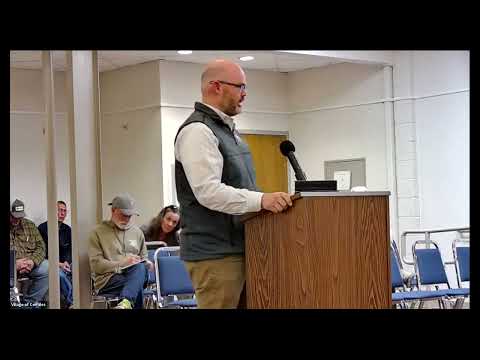
Jason, a MRGCD representative, said the project is designed and funded, and the district received responsive bids in November, but cannot issue a notice to proceed while contractor access to the work site is unresolved. “We were prevented from issuing the notice to proceed,” he said, adding that MRGCD “greatly disagrees” with the BIA finding but has limited avenues that would speed construction.
MRGCD has offered a variety of negotiation positions to Sandia Pueblo, including a counteroffer the Pueblo did not accept, and has proposed facilitated mediation to accelerate talks. Jason said MRGCD believes it holds documentation supporting its right-of-way claim but that the BIA did not accept those records.
Councilors asked whether a government-to-government approach — including a possible mayoral meeting with the Pueblo governor — could help. Jason said he would discuss inviting the mayor to Tribal Council if appropriate and that community letters to the Pueblo governor could be directed via the Pueblo’s published mailing address.
On schedule and cost, MRGCD said the low bidder estimated roughly 12 months to complete construction under conservative assumptions; engineering delays related to access slowed the bidding schedule but contractors indicated they could have finished before December 2025 if allowed to proceed. Jason cautioned that construction costs are sensitive to market shifts and tariffs, which have affected fabricated components.
MRGCD also outlined operational and hydrologic constraints: existing pumps used by Corrales are on MRGCD property (not tribal land), a third pump is staged in Albuquerque as backup, and wind-driven weed plugs have caused multiple channel breaks that reduce reliability. Jason said March forecasts placed Rio Grande flows at roughly 36% of median — “the lowest value I’ve seen in my career” — and estimated San Juan–Chama allocations could fall from last year’s ~100% (about 20,900 acre-feet) to roughly 50–60% (an estimate of 10,000–12,000 acre-feet), though he emphasized allocation remains undetermined.
Jason said Plan B options that avoid the siphon were previously analyzed and found more expensive; such alternatives could require touching the river, additional environmental compliance and different construction trade-offs. For now, he said, negotiating for access with Sandia Pueblo is the fastest route to getting the siphon built and the grant funds expended as designed.
The council did not take formal action on the siphon at the meeting. Jason invited follow-up contact and said MRGCD staff would continue negotiations while remaining open to community engagement and possible facilitated meetings with tribal leaders.