Get Full Government Meeting Transcripts, Videos, & Alerts Forever!
Get email alerts on the Bond Infrastructure topic
No spam. Unsubscribe anytime.
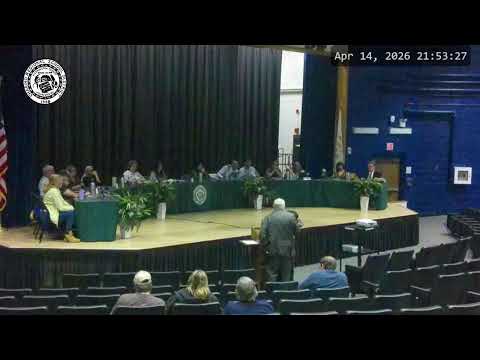
Chariho committee approves bond legislation language for unified elementary campus after heated public debate over voting structure and funding
Summary
School committee approved bond legislation and a memorializing resolution to send a $116 million unified-elementary bill to the General Assembly after members rejected amendments that would have required each town to vote separately or capped future bonds; public speakers and some members warned the changes could torpedo the proposal.
The Chariho Regional School Committee voted April 14 to approve bond legislation as drafted for a proposed unified elementary school campus serving Charlestown, Richmond and Hopkinton and adopted a resolution asking the Rhode Island General Assembly to introduce the bill.
The updated legislation reflects planning changes developed with the district’s architects and consultants: the bond principal amount was increased to $116 million to reflect revised square-footage estimates, potential building configurations (one school or multiple buildings on a single campus), and inflation and reimbursement assumptions. The draft also added language addressing land acquisition options and clarified that the elementary school could consist of one or more buildings on a single campus.
The bond discussion dominated the meeting. Committee members and many public commentators debated two flashpoints: (1) how voters should decide the bond — by a district-wide majority or by separate majority votes in each town — and (2) how construction costs should be apportioned (a one-third split proposed by some versus the Chariho Act formula based on student population). An amendment to the draft requiring each town to approve the bond by its own majority failed in a tie; the main motion to approve the legislation as written then passed following a roll-call vote.
Supporters argued that following the Chariho Act formula and a district-wide vote had precedent (citing the main-campus bond that passed in November 2024) and offered the best chance of success in the General Assembly and at the ballot. Opponents said local control required town-level approval or a funding split to protect taxpayers in individual towns and prevent a perceived “bait and switch.” Speakers raised technical questions about the number of buildings, whether two smaller adjacent school buildings could be built on one campus, and how state reimbursement rules (RIDE) apply.
Administration staff and the district’s architects explained design trade-offs: two smaller buildings on a single campus can reduce some construction inefficiencies associated with one very large building and may improve natural light and roof-area costs; consultants estimated that revised configurations and inflation accounted for the increase in the requested principal amount. The administration also circulated a memorializing resolution that, if approved, would authorize transmitting the draft legislation to the General Assembly; the committee approved that resolution in a separate vote.
Several members warned that continued delay raises project cost risk: consultants and administration noted that continued postponement increases exposure to inflation and that preliminary work already spent on architecture and planning is substantial. Public commenters pressed both sides: some urged immediate passage to avoid future cost escalation, while others sought to preserve town-level veto power.
Next steps: the district will transmit the approved package to the General Assembly for introduction and continue public outreach. If the bill is introduced, it must pass through House and Senate committees and be approved on the floors; the transcript records committee passage of the memorializing resolution but does not record any action at the General Assembly.