Get Full Government Meeting Transcripts, Videos, & Alerts Forever!
Get email alerts on the Vacancy Succession topic
No spam. Unsubscribe anytime.
Charter reviewers seek clearer mayoral succession language after debate over whether council president can be compelled
Summary
Norton charter-review members debated Section 2.04’s wording after members read 'shall become mayor' as potentially compelling a council president; the group asked staff to redraft fail‑safe language and to consider a time cap and special-election trigger.
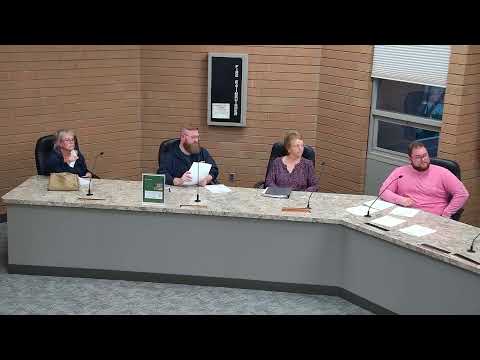
Members of a Norton City Council charter-review working group spent much of their meeting parsing how the city should handle a vacancy in the mayor’s office, pressing staff to rewrite a sentence they said could be read as forcing the council president to assume the mayoralty.
The discussion centered on Section 2.04, which presently states that if a mayoral vacancy exists the “president of council elected at the organization meeting … shall become mayor.” Several members said that phrasing — particularly the word shall — reads as compulsory and conflicts with earlier committee discussions that acknowledged a council leader could decline the post.
“We thought the last sentence was supposed to come out at the last charter review,” one member said, arguing the existing language creates an “oxymoron” by both allowing a decline earlier and then mandating the president assume office. Committee members described the existing practice as a sequence of fail‑safes: president of council, vice president, another council member, and, only after those avenues fail, the administrator.
The group repeatedly emphasized two related points: first, they did not want to compel an individual councilor to take on mayoral duties against their will; second, they wanted to avoid a situation in which the city could be leaderless for years. Members suggested adding a clear cascade of successors and specifying a time limit (examples discussed included six to 12 months) after which the council must either call a special election or take explicit action.
Denise Mullen, who led parts of the discussion, asked staff to draft revised language that "closes the loop" and resolves the apparent contradiction. Committee members also raised the idea — discussed but not favored — of creating a paid deputy‑mayor as a dedicated fail‑safe. Several members said they thought a new paid position would be difficult to approve given the city’s fiscal constraints.
Next steps: the committee asked staff to redraft Section 2.04 to clarify the ordered fail‑safes, remove ambiguous or conflicting sentences, and include an explicit timing mechanism that would allow council to trigger a special election if a vacancy persists beyond a defined period.