Get Full Government Meeting Transcripts, Videos, & Alerts Forever!
Get email alerts on the Sustainable Fashion topic
No spam. Unsubscribe anytime.
University of Utah panel urges wider access to sustainable fashion, highlights campus free-thrift sites
Summary
Students, campus advocates and a local designer at a Hinckley Institute Earth Month forum discussed how to make sustainable fashion more affordable and equitable, urged corporate and policy changes to cut waste, and described multiple free-thrift locations and donation procedures on campus.
A University of Utah forum hosted by the Hinckley Institute of Politics on Earth Month explored how fashion, sustainability and climate justice intersect and what students and institutions can do to reduce waste and expand access.
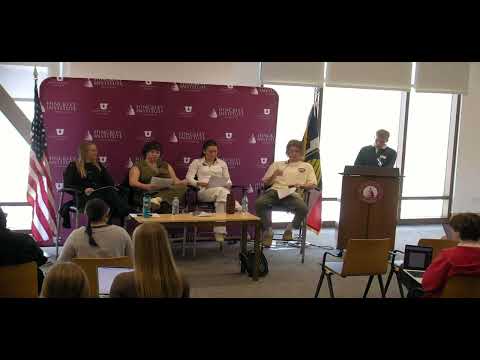
Brady Dunn, the event moderator and a junior and third-year intern with the Office for Sustainability Education, opened the panel and framed the conversation around the 2026 theme “sustainability is always in fashion.” Panelists introduced themselves and described practical and policy approaches to slowing fast fashion’s environmental and social harms.
Panelists — including K. Roberts, a sophomore who works for Depot on campus; Drew Holton of local apparel brand Beehive Threads; Kai Gaul, a case coordinator with the Basic Needs Collective; and Chariri, associate director of advocacy services for the Center for Campus Wellness — warned that sustainable clothing often faces three barriers: higher upfront price, limited access to secondhand and repair resources, and labor inequities in production. They said addressing those gaps requires both individual and institutional action.
On campus access, panelists pointed to the university’s ‘‘wellness exchange’’ model of low-barrier, self-serve free-thrift locations and pop-up events. They said students can donate items at campus donation bins or coordinate large drop-offs by email; the panel listed current sites that include the Peterson Heritage Center, a wellness hub in the Student Services Building, a Basic Needs Collective thrift in the union basement (next to the food pantry), a presence at the school of dentistry and planned locations such as Sunnyside Apartments. Panelists added that a new site is scheduled to open in the fall.
Panelists emphasized practical consumer steps that reduce waste and cost over time: buy fewer items of higher quality, evaluate cost per wear, wait before impulse purchases, mend and repurpose garments, and participate in swaps and local repair events. One panelist recommended asking before buying, “Am I going to wear this 30 times?” as a test of necessity.
They also discussed broader policy options to limit corporate waste, such as discouraging routine destruction of unsold merchandise, favoring production-on-demand instead of mass overproduction, and encouraging redistribution of excess event apparel rather than landfill disposal.
During an audience Q&A, a student who identified herself as Rachel asked why thrifting can be expensive; panelists responded that campus free-thrift efforts and coordinated donation programs are intended to offset rising resale prices and emphasized choosing donation partners and supporting locally run markets and farmers markets when possible.
The forum closed with panelists urging students to normalize sustainable choices, reduce stigma around secondhand clothing and make sustainability a community standard rather than a bonus. Flyers with location and donation details were made available at the event.