Get Full Government Meeting Transcripts, Videos, & Alerts Forever!
Get email alerts on the Fire Marshal And Bes topic
No spam. Unsubscribe anytime.
Kerr County posts RFQ for part‑time fire marshal and adopts a BES permit fee schedule; court clarifies oversight and billing approach
Summary
After editing language on oversight and hours, the court approved posting an RFQ for a part‑time (contract) county fire marshal and adopted a clarified battery energy storage (BES) permit and fee schedule tied to the state fire code. Commissioners limited part‑time billing to court‑authorized professional services and agreed to name a liaison who will oversee the contract work.
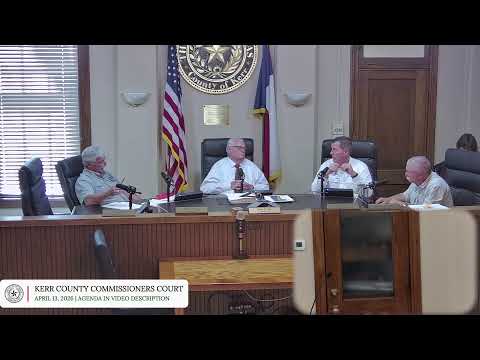
Kerr County commissioners on April 13 approved two interrelated steps intended to improve local oversight of battery energy storage systems (BES) and other fire marshal functions: (1) the court authorized posting a request for qualifications (RFQ) to hire a part‑time contract fire marshal, and (2) the court adopted a clarified permit and fee schedule tied to the state fire code.
Court discussion focused on three points: who authorizes contract hours and work, how the fire marshal will coordinate with local response agencies, and which fire code the fees should reference. Commissioners struck language that described the role as a county employee and instead approved posting the RFQ with this instruction in the RFQ's opening language: the position will be paid on an hourly basis for work performed at the request of the commissioners' court and overseen through the court liaison assigned to the project. The court also removed a requirement that the RFQ specify minimum monthly hours so the county can flex work assignments as needs arise.
On the fee schedule, the court adopted revised language clarifying that the applicable fire code is the code adopted by the Texas Department of Insurance and the state fire marshal, together with subsequent amendments, rather than identifying a local ordinance. Commissioners emphasized the RFQ and fee schedule establish standards and that individual contract terms — including specific duties, workloads and hourly caps — will be negotiated in the resulting professional‑services agreement and presented to the court for approval.
Why it matters: BES installations raise specialized fire‑safety and inspection questions. The RFQ and fee schedule create a local mechanism for technical review, permitting and cost recovery while keeping final contracting and enforcement authority with the court.
What's next: County staff will post the RFQ with the edited language and later present selected qualifications and a proposed contract for court approval. The fee schedule will be used as the baseline permitting and fee policy once a contract is in place.