Get Full Government Meeting Transcripts, Videos, & Alerts Forever!
Get email alerts on the School Policy topic
No spam. Unsubscribe anytime.
Griffin-Spalding County board adopts consent agenda and opens first readings of several policy revisions
Summary
At its April 14 work session the Griffin-Spalding County Board of Education approved the consent agenda 5-0 and received first readings on revisions to the district's dual-enrollment, recess/unstructured break time, and promotion-and-retention policies; the drafts will be posted for public comment.
The Griffin-Spalding County Board of Education approved its consent agenda by voice/hand vote, 5-0, during a work session on April 14, 2026.
The board then reviewed several policy revisions on first reading. Dr. Sims presented revisions to policy IDC (dual enrollment) to align district procedures with the Georgia Student Finance Commission, including clearer rules about how credits and grades transfer back to the high school and a requirement that program information be shared with students and families. Dr. Sims said the revised policy will be posted for a 30-day public comment period.
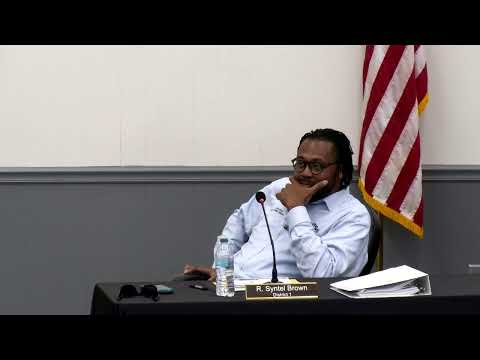
Board member Mr. Brown raised the policy’s origin, asking whether the changes stemmed from a case in which a dual-enrolled student failed a course. Dr. Sims confirmed that the revision was partly prompted by that situation and suggested the policy could function like a compact or signed agreement between student and parent to clarify expectations.
The board also heard a first reading of policy IEDA on recess and unstructured break time. Dr. Sam explained the draft distinguishes K–5 recess from middle-school unstructured break time, adds definitions for both and states that elementary recess shall not be removed for academic or disciplinary reasons. Board members questioned and clarified grade spans in the draft language so the final text aligns K–5 recess and K–8 unstructured break definitions as intended.
A separate revision to the district’s promotion-and-retention policy removes vendor names for universal screeners and replaces them with the phrase “district-approved universal screener,” a change intended to prevent frequent policy edits when the district changes assessment vendors. The board was told the substantive promotion and retention recommendations themselves were not changed.
None of the policy items were adopted at the work session; they were presented for first reading and will return after the public comment period. The board later moved into executive session to discuss personnel and superintendent applicants.