Get Full Government Meeting Transcripts, Videos, & Alerts Forever!
Get email alerts on the Kindergarten Readiness topic
No spam. Unsubscribe anytime.
Chesapeake Public Schools webinar: Nearly half of incoming kindergarteners lack at least one foundational skill, official says
Summary
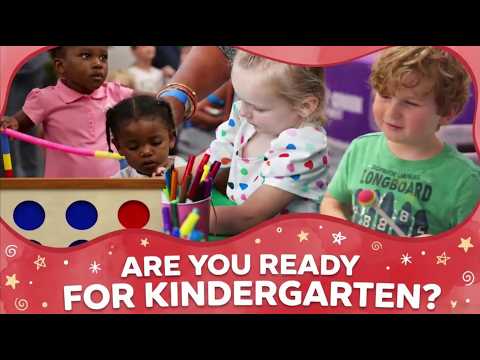
At a Chesapeake Public Schools webinar, Preschool Initiative Supervisor Lauren Perez highlighted Virginia Department of Education VKRP data showing 49% of incoming kindergarteners scored as needing development in at least one foundational skill and offered practical home activities to build literacy, math, self-regulation and independence.
Lauren Perez, Chesapeake Preschool Initiative Supervisor, told parents at a Chesapeake Public Schools Family Empowerment webinar that recent Virginia Department of Education data show nearly half of incoming kindergarteners need help with at least one foundational skill. "According to the fall 2024 VKRP assessment, 49% of students entering kindergarten needed to develop at least one foundational skill," Perez said, adding that the district is seeing progress but that gaps remain.
Perez said kindergarten readiness is a partnership among the child, family, school and community and split readiness into academic foundations (literacy and math) and functional skills (self-regulation, independence, social skills). She urged families to prioritize everyday routines to build skills, from fine motor activities such as cutting and lacing to repeated shared reading to expand vocabulary.
Perez offered concrete benchmarks and activities parents can use at home. For alphabet knowledge she said typical fall letter ID benchmarks are roughly 15–18 uppercase letters and 10–15 lowercase letters, and recommended practicing name-letter sorting and handwriting strokes. For early math, she stressed one-to-one correspondence—counting each object once—and suggested routines such as counting socks or snacks and matching sets to written numerals.
Beyond academics, Perez emphasized social-emotional skills and self-regulation as predictors of long-term school success. "Self-regulation is the foundation of learning," she said, describing it as the ability to manage attention, transitions and impulses so a child can absorb instruction and work with peers. She encouraged parents to model calm responses, teach deep-breathing and name feelings (for example: "frustrated," "excited," "nervous") so children can better manage emotions in the classroom.
Practical self-help skills were also a focus: Perez recommended that children practice independence with clothing fasteners, opening lunch containers and managing backpacks to reduce transition delays that can eat into instructional time. She urged families to build full bathroom independence—proper wiping, handwashing and navigating school restrooms—before the first day of school.
Perez closed by directing families to a quick-reference skills sheet available via QR code and reminded parents that their child’s kindergarten teacher is the primary source for classroom-specific information. "We are honored to walk alongside you as your child begins their kindergarten journey with Chesapeake Public Schools," she said.
The webinar was hosted by Chesapeake Public Schools’ Family and Community Engagement office and recorded for posting to the district’s YouTube channel.