Get Full Government Meeting Transcripts, Videos, & Alerts Forever!
Get email alerts on the Land Use topic
No spam. Unsubscribe anytime.
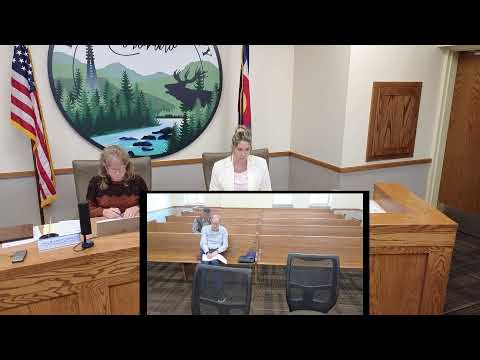
Rio Blanco commissioners table vote on local rules for 'healing centers' after public safety, zoning and enforcement questions
Summary
After staff and the planning commission recommended a county framework for 'healing centers' (medically supervised locations for certain psychedelic medicines), commissioners heard public questions on staffing, fire suppression, hours and separation distances and voted to table the item for further research and amendments until May 5.
County officials on April 14 opened a public hearing on a proposed amendment to Rio Blanco County’s 2016 land-use rules to regulate so-called "healing centers," local facilities intended for medically supervised on-site consumption of a short list of hallucinogenic medicines approved by voters and state regulators. Planning staff and the county planning commission recommended approval, but commissioners postponed a final decision.
Planner Leaf summarized the draft rules and the process, saying the county must allow healing centers under state law but can narrow where and how they operate. Leaf told the board the draft would limit centers to industrial zoning in unincorporated county areas and to sites within five miles of a recognized hospital, and that the planning commission voted 5–0 to recommend the draft.
The draft drew detailed public comment and questions from commissioners. Edmond Tech, who submitted a packet of comments to staff, said the law grew out of a ballot measure and is now governed at the state level. "It is covered by Colorado Revised Statutes 213-1," he said, and urged adding local safety requirements such as a fire-suppression system. Tech told the board he supported rules that protect "the health, the safety, and the general welfare of our residents" and recommended explicit fire-safety standards.
Other public commenters raised questions about who would staff centers and what qualifications would be required. One commenter asked, "Are they going to be registered nurses? Are they going to be doctors?" Planning staff and the county attorney said many operational requirements (including staffing and medical protocols) derive from state regulations and licensing; local rules can impose supplemental land-use limitations such as hours, zoning and separation distances.
Commissioners pressed staff on several specifics they asked to investigate before voting: whether counties may impose hours of operation, whether a fire-suppression requirement is permissible and enforceable, how the 1,500-foot buffer from schools and childcare was chosen (the draft borrowed that distance from a town code), and whether centers should be limited to industrial zoning only. County Attorney Rose Paci said enforcement of any local land-use restriction would follow the county’s usual code-enforcement and court processes and that state officials generally do not proactively monitor locations unless prompted by complaints.
After discussion, the board voted to table resolution 2026-10—an amendment to Article 3, Section 3-203—so staff and counsel can research those questions and return with proposed changes. The board set the item to be heard again on May 5.
The public hearing record will remain open only through the final public hearing period established by the board. Commissioners asked staff to gather comparative rules from other counties, consult law enforcement and fire officials on hours and suppression systems, and to clarify which substances and state statutes apply.