Get Full Government Meeting Transcripts, Videos, & Alerts Forever!
Get email alerts on the Environment Air Quality topic
No spam. Unsubscribe anytime.
House Rules hearing sees sharp split over permitting reforms tied to the Clean Air Act
Summary
At a Rules Committee hearing, Energy and Commerce members defended three permitting bills — the Fire Act, Red Tape Act and Fences Act — as streamlining measures, while Democrats warned they would erode public‑health protections in the Clean Air Act and reduce EPA transparency.
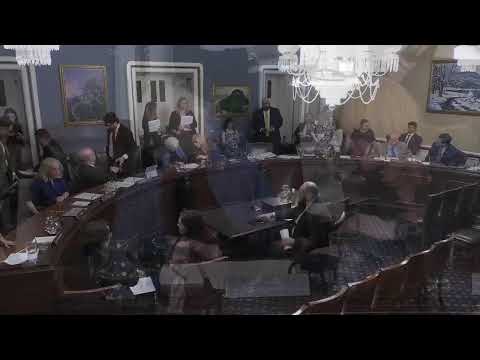
Chairwoman Fox convened the House Rules Committee to hear testimony from Representatives from the Energy and Commerce Committee on three bills intended to ease permitting burdens tied to the Clean Air Act. Representative Palmer described H.R.6409 (the Fences Act), H.R.6398 (the Red Tape Act) and H.R.6387 (the Fire Act) as targeted reforms that would prevent states from being unfairly penalized for foreign emissions, eliminate duplicative EPA reviews under NEPA, and ensure prescribed burns and other wildfire mitigation measures do not count toward non‑attainment calculations.
Representative Palmer (Representative, Energy and Commerce) told the committee the bills would “allow states to account for foreign emissions earlier in the regulatory process” and remove “duplicative and inefficient” reviews that delay projects. He also said the Fire Act would “ensure that states are not penalized for wildfire mitigation measures like prescribed burns and brush clearing” and argued the changes would add certainty and reduce regulatory delays for manufacturers and communities.
Democratic Representative Paul Tonko opposed all three bills, saying they would “gut critical public health protections in the Clean Air Act” and strip away EPA’s ability to impose sanctions or provide transparent public comment. Tonko argued the Fences Act would “ignore bad air quality in areas that experience any foreign pollution,” and the Red Tape Act would make permitting “less transparent by removing the requirement that EPA’s comments be made available to the public.” He said the Fire Act risked letting polluters evade accountability by expanding exceptional‑event definitions.
Committee members pressed witnesses on specifics. Representative Fischbach asked how the Red Tape Act eliminates duplicative effort; Palmer said it prevents unnecessary secondary EPA reviews that “slow the permitting process.” Representative Matthews pressed whether the Fire Act simply codifies existing EPA practice around exceptional events; witnesses acknowledged EPA can exclude some emissions but said the process is time‑consuming and uncertain for states. Several members warned that excluding foreign emissions or broadening exceptional events could create perverse incentives for jurisdictions to avoid pollution controls.
Why it matters: The three bills address a longstanding tension between easing permitting for energy and manufacturing projects and preserving public‑health protections for air quality. Supporters framed the measures as predictable, targeted fixes to streamline approvals; opponents said they risk reducing enforcement and transparency and would disproportionately harm communities with poor air quality.
What’s next: The Rules Committee debated but did not vote to advance these bills in this hearing; members will weigh rules and potential amendments before the measures reach the House floor. The committee took testimony from Energy and Commerce, then recessed to take up additional panels and later procedural votes.