Get Full Government Meeting Transcripts, Videos, & Alerts Forever!
Get email alerts on the Municipal Finance topic
No spam. Unsubscribe anytime.
Biloxi council wrestles with size and priorities of proposed general‑obligation bond
Summary
At a special workshop, Biloxi council members debated whether to cap a proposed general‑obligation bond at $14 million or pursue a larger package to cover maintenance and ward projects, with sharp discussion over an East Biloxi recreation center and how to balance deferred maintenance against new investments.
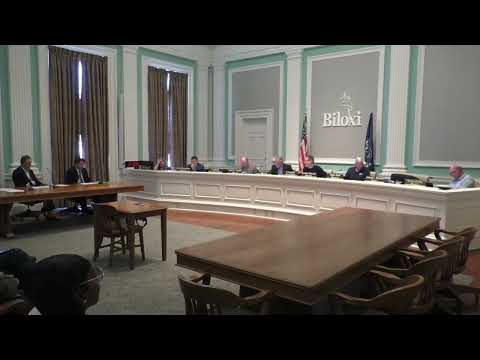
Biloxi — Council members at a special workshop on May 12 debated which projects to include in a proposed general‑obligation bond and how large that bond should be, with some members urging a $14 million cap and others pressing for a higher amount to cover promised ward projects.
The meeting opened with a procedural vote to approve the workshop agenda, moved by Mr. Creel and seconded by Mr. Wayne, and the clerk read that the subject matter was “projects and funding pertaining to general obligation bonds.” The council president framed the session around aligning ward priorities with the mayor’s list and finding an amount the city could manage financially.
“We want to put the most bang for the buck,” the mayor said, urging the council to prioritize objectively and adding, “I have no favorites.” Councilman Marshall pressed the council to prioritize a $4 million East Biloxi recreation center he said had been promised years ago. “We’re just asking that the promise be kept,” Marshall said, arguing the project would spur economic development and that delaying construction increases cost.
Councilman Tisdale walked members through a spreadsheet that aggregated council members’ first and second priorities (roughly $15.6 million) and the mayor’s ‘must‑have’ list (about $16.8 million). Tisdale noted some items overlap and that adding a Ward 7 market‑acre subdivision would add roughly $2.1 million to the total. “That alone runs roughly $15.6 million… the mayor’s list totals about $16.7–$16.8 million,” Tisdale said as he described the tallies.
The exchange grew contentious when members discussed whether a $14 million cap would effectively preclude promised investments in some wards. Marshall and supporters said the city’s bond advisors indicated a higher issue (18–20 million) would still be manageable and would allow more wards to obtain pledged projects; other council members countered that a significant portion of the mayor’s list—about $6.5 million—appeared to be deferred maintenance (roofs, HVACs, generators) that the city must address to avoid future failures.
Administration staff cautioned that line‑item costs on the spreadsheet are estimates based on prior bids and comparison projects and will change once designs and formal bids are completed. “These are our best educated guesses; we won’t know final costs until design is done and bids come in,” Miss Labata said. The staff also explained an item labeled a “repetitive loss purchase” (about $2.3 million on the sheet) is an option to address a flood‑prone area either through acquisition or a large drainage project; FEMA or other grants might be possible after a storm but are not guaranteed.
Council members then proceeded ward by ward to plug in their top one or two priorities so staff could produce a revised tally for a 1:30 p.m. resolution meeting. Councilman Marshall reiterated his ward’s single priority was the East Biloxi recreation center, which he estimated at about $4 million; other members listed sidewalks, drainage projects, road widenings, the lighthouse restoration and facility repairs as their top items.
Two procedural motions recorded during the workshop were: approval of the workshop agenda (moved by Mr. Creel, seconded by Mr. Wayne; voice vote, motion carried) and a motion to adjourn (moved by Mr. Gray, seconded by Mr. Krill; carried). Staff committed to update the spreadsheet, add a column for additional mayor‑requested items, and distribute an updated handout for the afternoon session.
What happens next: staff will provide the revised project list and updated totals for the council’s 1:30 p.m. meeting and prepare language for a resolution that would set an authorized bond amount and list priorities. Council members emphasized the plan could change if emergency repairs arise or if grant opportunities offset bond needs.