Get Full Government Meeting Transcripts, Videos, & Alerts Forever!
Get email alerts on the Municipal Finance topic
No spam. Unsubscribe anytime.
Biloxi council debates splitting MIMA funds into ward accounts, asks city attorney and budget committee to study options
Summary
At a Feb. 3 workshop the Biloxi City Council discussed creating project accounts for each of the city’s seven wards to distribute Mississippi Modernization Act (MIMA) funds (about $2.2 million). Council members disagreed on equal per‑ward splits, emergency set‑asides and legal risks; no policy was adopted.
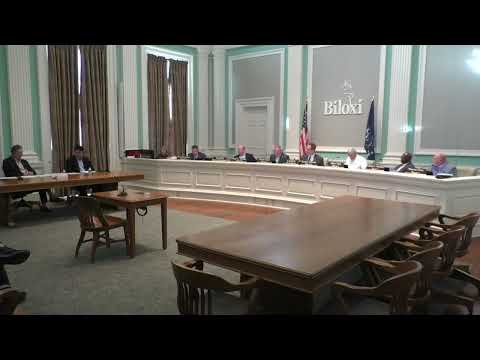
Biloxi City Council members met in a special workshop on Feb. 3 to discuss whether to create separate project accounts for each of the city’s seven wards to distribute Mississippi Modernization Act (MIMA) funds, roughly $2.2 million on hand. The council took no final action and asked the city attorney to report back on legal structures and asked the budget committee to draft a framework for a future workshop.
The meeting began with the clerk reading the workshop purpose: to examine creation of project accounts for each ward, distribution of funding and spending rules under the Mississippi Modernization Act. Council members repeatedly raised two core tensions: (1) whether splitting funds equally by ward would be fair, and (2) whether creating per‑ward accounts would legally or financially restrict the city’s fund balance and harm its bond rating.
Peter, the city attorney, summarized legal constraints and an Attorney General opinion the council had not seen before its initial vote on a related resolution. "Unspecified projects, unspecified amounts just sitting in the ward is not appropriate under the mayor–council form of government," he said, recommending instead holding funds in a general account and authorizing spending through project‑specific resolutions when projects are identified.
Supporters of per‑ward accounts said placing money in ward accounts would ensure equity and give council members a clearer tool to deliver projects for constituents. One council member framed the proposal as a way to "secure some funding for parks, some roads that we need," and gave locality examples such as playground equipment and waterline repairs.
Opponents and staff cautioned about potential financial consequences. A finance adviser warned that treating MIMA proceeds as further restricted — particularly if restricted per ward — could reduce the city’s unrestricted fund balance and "affect your bond rating," noting rating agencies look closely at unrestricted reserves. Councilman Tisdale, who urged using the upcoming budget process to clarify project scopes and funding sources, said budget season offers the appropriate time to align projects and revenue.
Members discussed alternatives: a single city account with a council‑driven priority list, annual allocations during the budget process, or a split that reserves a portion for an emergency/contingency pool. Several council members proposed idea variants such as a 50/50 split (half to general repair/replace and half to ward projects) or smaller percent set‑asides for emergencies. No specific split or time horizon (one year vs. multi‑year commitment) was approved.
The council also asked staff to study how Gulfport structured similar accounts and whether that approach could be adapted. Council members said they wanted a fair, transparent mechanism that would not unintentionally bind future councils or impair flexibility for urgent repairs.
Next steps: the city attorney will return with legal options and examples from peer cities, and the budget committee will gather input from council members and draft a recommended framework for a subsequent workshop. The meeting adjourned after routine procedural votes.
The council took no ordinance or resolution at this workshop; the matter remains under study with anticipated follow‑up workshops and potential budget‑cycle actions.