Get Full Government Meeting Transcripts, Videos, & Alerts Forever!
Get email alerts on the Dixie Cup Tif topic
No spam. Unsubscribe anytime.
Public hearing on Dixie Cup TIF draws residents urging stronger affordable-housing terms; county sets May 7 vote
Summary
A public hearing on a proposed TIF for the former Dixie Cup site in Wilson Borough drew widespread concern that the ordinance’s fee-in-lieu — $31,707.32 per unit for 10% of units, roughly $1.3 million over 20 years — is inadequate to produce affordable housing. The developer and counsel said the site is a brownfield and offered up to $2 million; council scheduled a May 7 vote.
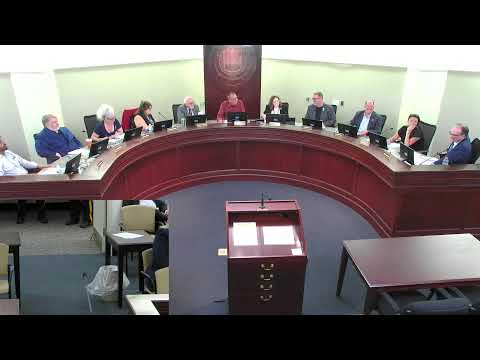
A Northampton County public hearing on April 16 drew dozens of residents, municipal leaders and the developer to discuss a proposed tax increment financing district for the former Dixie Cup site in Wilson Borough.
Community speakers pressed council to require meaningful on-site affordable housing or a much larger fee in lieu than the one proposed. "You cannot build 40 units of affordable housing for $1.3 million," said Armando Moritz Pelikan, president of the Wilson Area Links coalition, referring to the ordinance’s offer that a developer could pay approximately $31,707.32 per unit for 10% of the project’s units. Pelikan urged council to raise the fee to at least $100,000 per unit or require on-site affordability.
Developer and legal counsel framed the measure differently. Jonathan Cox of Eckert Seamans, special counsel to Skyline Investment Group, said the property is a brownfield that requires substantial remediation and that tax increment financing is the tool to make redevelopment viable. Brian Barti, managing partner of Skyline, said he has remediated contamination, paid back taxes and is willing to increase his contribution to the county to $2 million up front. Barti warned that forcing too many on-site affordable units could render the project unfinanceable and halt the redevelopment.
Several speakers — including longtime residents and former Easton council member Taiba Sultana — warned that market-rate units starting near $1,800 to $2,800 a month will raise surrounding rents and displace current residents. Sultana summarized the project as "roughly $180 million" with about 405 units and said public support already includes roughly $500,000 in state funding and up to $26–$29 million in TIF authority for the three taxing bodies combined.
Local officials also spoke. Don Barrett, mayor of Wilson Borough, recounted the site’s industrial history and urged the county to approve a deal that will return the property to productive use. Several council members emphasized the project’s remediation benefits and the unanimous local backing by Wilson Borough and the Wilson Area School District; supporters said a vote against the TIF could leave the building vacant for years.
Council did not vote on the ordinance April 16. The president announced that the public hearing record will remain open and that a public hearing with possible formal action is scheduled for the May 7, 2026 council meeting.
Why it matters: The council’s choice will set a local precedent for how the county balances developer incentives, brownfield remediation and on-site affordability when public funds or tax relief are used to support large private redevelopment projects. The discussion also highlights a common policy trade-off: using public incentives to unlock remediation and private investment versus strict affordability requirements that may make projects financially infeasible.
Next step: The council will consider the ordinance again at its May 7 meeting; any vote and final terms (fee-in-lieu amount, percent of required affordable units, or other conditions) will be recorded then.