Get Full Government Meeting Transcripts, Videos, & Alerts Forever!
Get email alerts on the Budget topic
No spam. Unsubscribe anytime.
Austin council trims proposed 2026 levy to 7.5% after hours of public comment
Summary
After more than two hours of public testimony on spending priorities — including concerns about consultant contracts, city property purchases and a proposed pickleball project — the Austin City Council voted to reduce the proposed 2026 property tax levy to a 7.5% increase, directing staff and council to find $273,000 in reductions before certification.
Mayor King opened the Sept. 15 meeting with an apology for the way a prior meeting was handled and moved public comment on the proposed 2026 tax levy to the start of the agenda so residents could be heard.
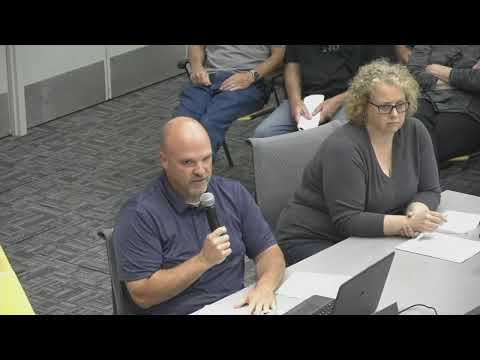
Residents raised repeated concerns about budget transparency and spending. “How a lay person can get a copy of the budget with all of the increases and everyone’s salaries?” asked Tim Sergene, who was directed to the city’s 194‑page budget posted online and to the city’s public data request form for individual salary information. Jack Wilson criticized heavy use of outside consultants and urged more in‑house work; staff and engineers explained consultant use is typically for specialized wastewater or design work such as the sump‑pump inspection and sanitary sewer collection programs.
Concerns about city property purchases were frequent. Scott Soderberg said purchases such as the Herald building and other properties appeared to remove parcels from the tax rolls and asked how those acquisitions returned value to taxpayers. Staff and council members pointed to a mix of funding sources — including a half‑cent sales tax used for flood mitigation and state grants — and said some strategic acquisitions aim to seed future redevelopment rather than produce immediate tax revenue.
A heated segment of public comment focused on a proposed $500,000 pickleball courts project. Residents and council members debated whether the project, which backers say has raised roughly $350,000 in grants and donations and seeks $150,000 from the city’s building fund, should move forward while the city faces tight finances. “I’m not opposed to pickleball courts, but $150,000 of taxpayer money right now does not make sense,” one resident said. Council members highlighted the project’s private fundraising and potential economic benefits while acknowledging it would not serve every resident.
Other testimony pressed the council for clearer, searchable budget documents and a living CIP so constituents can track project priorities, funding sources and performance measures rather than receiving a large static PDF late in the year. “When there’s the absence of data and supporting documentation, people revert to emotion and it becomes a snowball effect,” Rebecca Dyer told the council.
After more than an hour of public comment and internal discussion on potential cuts — options included delaying reopening the pool, trimming capital projects or looking at 1–2 full‑time equivalents (staff estimates ranged $150,000–$300,000) — Councilmember Baskin moved to set the levy at a 7.5% increase (described in the meeting as a $10,535,000 levy, a $273,000 reduction). The motion passed; the council recorded the outcome in the minutes as “Motion passes 4‑3.”
City staff reminded council that the levy must be certified to the county by Sept. 30 and that a truth‑in‑taxation hearing was scheduled for Dec. 3 at 6 p.m. The vote narrows the council’s available options for additional revenue but gives council a short window to identify the specified reductions before final certification.
What’s next: the council will finalize budget adjustments in public sessions over the coming weeks and present the detailed tax/levy materials at the truth‑in‑taxation hearing in December.