Get Full Government Meeting Transcripts, Videos, & Alerts Forever!
Get email alerts on the Commission Authority topic
No spam. Unsubscribe anytime.
Assistant city attorney tells Oroville Park Commission it advises on policy; director handles operations
Summary
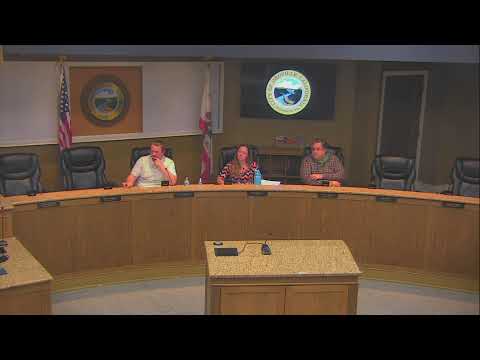
Assistant City Attorney David Richie briefed the Oroville Park Commission on April 14, explaining that under the city charter and municipal code the commission provides policy guidance (including park uses and tree designations) while operational duties — including urgent tree removals — rest with the director; appeals route to the city council.
Assistant City Attorney David Richie told the Oroville Park Commission on April 14 that the commission’s authority under the city charter is primarily advisory and that the city council retains final budgetary and property authority.
"Ultimately the director's responsible for carrying out things like concerns about health and safety, public policy, those kinds of things," Richie said, describing the practical line between policy-making and day‑to‑day operations.
Why it matters: Commissioners interpreted sections of Article 10 and related municipal-code provisions as granting broad powers, but Richie walked the commission through how to read general charter language alongside more specific municipal-code provisions. He said specific code (for example, provisions in Title 12 and Title 16) narrows and shapes the charter's general statements, and finance and contract authority remain with council and the finance department.
Richie explained the commission can adopt policies on park uses, set park hours, and designate historic or specimen trees by resolution. Such designations give the commission a role in decisions about those trees, including hearings when a private owner seeks removal. But he stressed exceptions: if the public‑works director deems a tree a health or safety hazard, the director may remove it immediately under operational authority and then seek post‑action review or report to the commission and council.
The briefing also covered the commission’s limited fiscal reach. Richie noted the park fund accepts direct donations and certain restricted revenues, but the annual budget and appropriations remain the council’s responsibility. "You can decide if you get a budget to put some of the money in that fund," he said, "but you can't appropriate it out of the council budget without their approval."
Richie reviewed procedural differences between quasi‑legislative matters (for example setting park rules) and quasi‑adjudicative matters (for example deciding whether a designated tree may be removed), and warned that adjudicative decisions can implicate broader conflict‑of‑interest rules and appeal rights under the city’s administrative code (Title 2). He urged commissioners to cite code sections when documenting decisions and to invite staff to prepare staff reports that clearly identify the ultimate decision maker and appeal route.
Commissioners asked about the commission’s ability to appoint a parks superintendent. Richie said appointment depends on whether the council has allocated and funded a position for the commission to fill; without a funded allocation the public‑works director performs those duties.
Richie offered to provide presenter notes and to return for future meetings, especially when appeals or contentious tree decisions arise. The commission agreed the briefing clarified how to route matters — policy issues to the commission, operational emergencies to the director, and final appeals to council.