Get Full Government Meeting Transcripts, Videos, & Alerts Forever!
Get email alerts on the Transportation topic
No spam. Unsubscribe anytime.
County study finds lighting and design changes could cut crashes; Russell Road median recommended
Summary
A TPO-funded lighting study identified five priority intersections and found a substantial share of fatal and nighttime crashes; the Russell Road capacity study recommended a divided two‑lane section with median by 2050 and short-term safety fixes, with conceptual costs estimated at about $60 million.
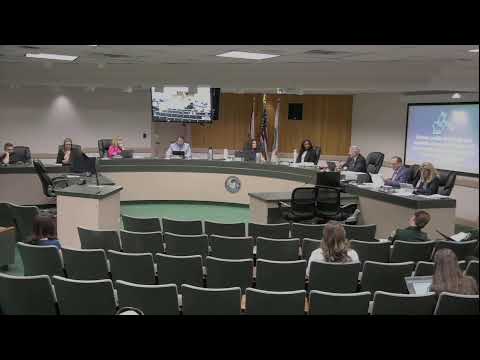
Consultants presented two transportation studies to the Clay County Board of County Commissioners on April 14 that recommend targeted street‑lighting improvements and design changes along Russell Road to reduce crashes.
Terry Shaw of Kimley‑Horn, presenting the lighting study for the North Florida Transportation Planning Organization, said the county recorded 10 fatal crashes on county roads in the five‑year period ending Dec. 31, 2025, and that dark or unlit conditions contributed to many incidents. "There were 10 crash fatal crashes on county roads in the last five years," he said, and consultants identified five countyroad locations where lighting upgrades could have the largest safety benefit.
Shaw displayed concept plans and generalized construction and operations costs for different intersection and corridor lighting configurations, and flagged the federal Safe Streets for All grant program as a potential funding source.
On the Russell Road capacity study, consultants reviewed crash patterns and traffic forecasts. The corridor has experienced about 50% traffic growth over the past decade; with a conservative forecast the corridor could reach roughly 20,000 vehicles per day by 2050. The study recommended a two‑lane divided section with a narrower median and turn lanes at intersections to improve safety and operations. Consultants estimated a concept cost of roughly $60 million when accounting for design, environmental mitigation and construction.
Commissioners probed details such as whether lighting designs assumed new poles or reuse of existing utility poles, sample size for the crash analysis (the study used a five‑year window, 2020–2025), and possible federal funding opportunities. Richard Smith, Clay County’s county engineer, emphasized short‑term fixes that can be advanced sooner — filling sidewalk gaps, adding shoulders and prioritizing lighting at the most crash‑prone intersections.
The studies are now in staff review. Commissioners asked staff to pursue grant opportunities and to bring cost‑and‑phasing recommendations back to the board.