Get Full Government Meeting Transcripts, Videos, & Alerts Forever!
Get email alerts on the Procurement topic
No spam. Unsubscribe anytime.
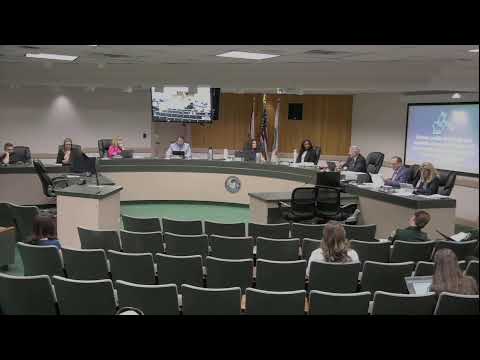
Commissioners debate RFQ process as small businesses urge more slots for local firms
Summary
At the April 14 meeting, public commenters and several commissioners urged Clay County to qualify more small, local firms under a multi-category professional-services RFQ, arguing the current shortlist sizes favor large firms and risk higher taxpayer costs; staff said state procurement rules limit some options but agreed to review scoring and category sizes.
A public plea from a small, local environmental consultant set the tone for an extended debate over Clay County’s continuing professional‑services request for qualifications at the Board of County Commissioners’ April 14 meeting.
"If the county does not consider small businesses, opportunities like this will never come to us," said Amy Fu, president of Alpha Enviro Tech Consulting, during the public‑comment period, asking the board to award more than three firms in the environmental services category so small firms could compete.
Commissioners and staff spent more than an hour discussing the solicitation, which covers multiple categories including civil engineering, transportation planning, environmental services and surveying. Staff described a process required by the state Consultant Competitive Negotiation Act (CCNA) that emphasizes qualifications over price and limits how continuing contracts are used. County purchasing staff said that, under recent statutory changes, agencies may now request price proposals during the work‑order stage in certain circumstances, but many counties still rely on rotating qualified lists.
"We have to protect taxpayer dollars, and when you're only qualifying three firms for major categories you reduce competitive pressure," said Commissioner Condan, who asked for a broader pool in several categories and suggested revisiting evaluation criteria that award location points even when the people doing the work are out of county.
Purchasing staff said they had balanced anticipated workload and local office presence when recommending pool sizes; for example, some transportation categories were qualified with six firms because project volume is expected to be high, while other, smaller categories received three to five firms. The board approved differing pool sizes across categories (three to six firms) after debate and public comment; the surveying category was rejected by the board for additional internal review because the county recently lost its in‑house surveyor and staff said they want to reconsider how services will be delivered.
County staff and commissioners agreed to pursue several follow‑ups: revisit evaluation weighting (particularly the local‑presence credit), consider ways to increase small‑business participation, and explore whether the county can request project‑level pricing under the updated state law when appropriate.
The board approved most staff recommendations by motion with recorded votes on individual categories; several commissioners said they wanted staff to return with proposals to make the process more favorable to local firms and to improve transparency on projected workloads and historical spend.
The debate underscored tension between statutory procurement limits, the county’s desire to drive local economic opportunity, and the practicality of staffing and managing many continuing‑contract vendors for capital projects.