Get Full Government Meeting Transcripts, Videos, & Alerts Forever!
Get email alerts on the Animal Control topic
No spam. Unsubscribe anytime.
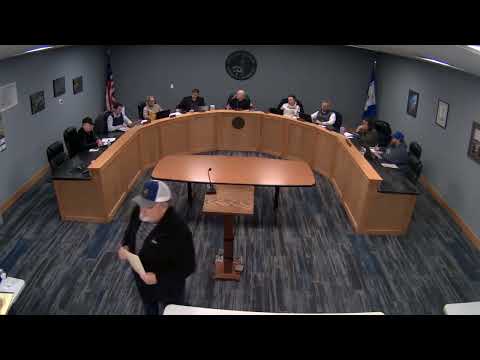
Resident Derek Davidson urges Kasson to classify attacking dog as dangerous after fatal attack
Summary
Derek Davidson told the Kasson City Council that his dog was killed in an Oct. 17 attack and asked the city to classify the animal as a "dangerous dog" under Minnesota law, seek possible criminal charges and restitution, and follow the statute as written.
Derek Davidson, a Kasson resident, told the city council his 30-pound dog was fatally injured on Oct. 17 after a larger dog forced itself under a fence and attacked while the animals were playing. Davidson asked the city to classify the animal that inflicted the fatal injuries as a "dangerous dog" rather than "potentially dangerous," citing Minnesota statute 347.50 and urging the city to apply the statute’s provisions in full.
"I'm requesting that the attacking dog be correctly classified as a dangerous dog underneath the Minnesota statute 347.50 rather than a potentially dangerous dog," Davidson said, describing having to fight the other dog off and the decision to euthanize his pet after catastrophic injuries and emergency veterinary care.
Davidson said the owner had acknowledged prior incidents involving the animal in another town, that the homeowners would not provide insurance information, and that he intended to seek restitution for documented veterinary costs and related expenses. He argued the behavior indicated a loss of control and a public-safety risk: "That kind of behavior demonstrates loss of control and clear threat to the community safety."
The council said it would take Davidson’s information "on advisement," consult with the police chief and follow up. No formal action or vote on animal classification was taken at the meeting; the council did not record any further direction in the transcript.
Why this matters: Classifying a dog as "dangerous" can trigger statutory requirements for confinement, registration, or other conditions and may affect criminal or civil remedies for victims. Davidson asked the council to apply the statute’s language and to consider restitution and criminal charges where warranted.
Next steps: Council staff said they would discuss the matter with the chief of police and report back to Davidson; the record in this meeting shows no formal change to the animal-control designation or an explicit timeline for further action.