Get Full Government Meeting Transcripts, Videos, & Alerts Forever!
Get email alerts on the Audit Finance topic
No spam. Unsubscribe anytime.
Auditor issues clean opinion for Caswell County Schools but flags shrinking fund balance and control weaknesses
Summary
An independent auditor issued a clean opinion on Caswell County Schools' 2024–25 financial statements while warning the district’s local fund balance fell sharply and two findings related to health-care drawdown procedures produced a budget violation.
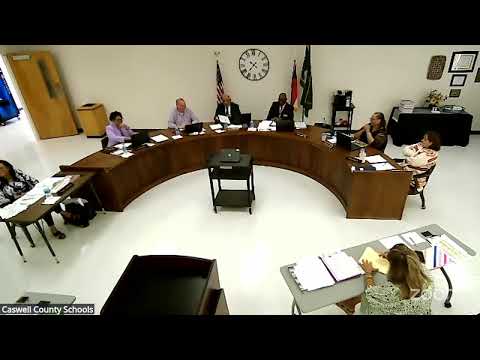
Adam Seper, a partner at audit firm Anderson Smith, told the Caswell County Board of Education the firm issued "a clean unmodified opinion" on the district's June 30, 2025, financial statements, but he warned the district is using its fund balance and needs to address control weaknesses.
Seper said the district’s general fund held $554,000 at year-end, a decrease of $847,000 from the prior year, and that the district used about $1 million of fund balance across local funds. He pointed to a ledger-item labeled a $525,000 bank overdraft created by shared accounts and transfers between the general and special revenue funds; he said the overdraft was a bookkeeping outcome of moving restricted balances into operating cash, not bounced checks.
The audit noted one compliance-positive trend and two areas of concern. On compliance, the auditor found no questioned costs in the federal child nutrition and ESSER programs and no findings related to how those grant dollars were spent. On internal controls, the audit recorded findings tied to the accounting treatment of health-care drawdowns: a software-sequence issue in July caused a liability to appear on the balance sheet rather than in expense, producing a budget violation that required correction and board follow-up. Seper said the sequence has been corrected and staff now monitor the account.
Seper also reviewed enterprise-type funds: school food service had roughly half a million dollars of cash on hand and showed a small increase from the prior year, in part from price adjustments and modest increases in federal meal reimbursements. He warned that ESSER funds have expired and that next year federal support will likely return to pre-pandemic levels, tightening local budgets.
Board members asked whether the finding required state follow-up; Seper said the district had submitted a response that the state had approved. He recommended the board focus on fund-balance sustainability and continue reconciling large liability accounts so future budget violations are avoided.
The board heard the report, asked clarifying questions, and discussed corrective steps; no formal action beyond discussion was required.