Get Full Government Meeting Transcripts, Videos, & Alerts Forever!
Get email alerts on the Solar Land Use topic
No spam. Unsubscribe anytime.
Dade County commissioners adopt ordinance tightening rules for large solar installations
Summary
Dade County commissioners unanimously adopted Ordinance 04‑02‑26 after public comment and discussion, adding a minimum 30‑foot buffer, tree‑replacement and restoration requirements, bonding protections for landowners, and enforcement provisions for commercial solar projects; rooftop and single‑farm systems remain exempt.
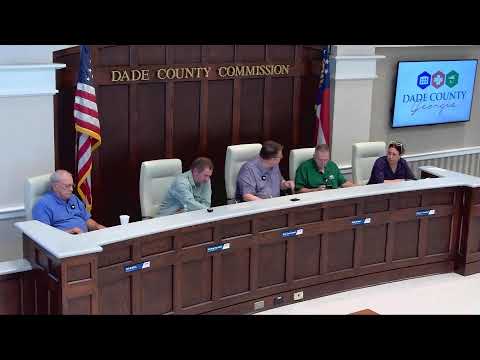
Dade County commissioners unanimously approved Ordinance 04‑02‑26 on April 16 after a public hearing and discussion of rules for large solar installations.
The ordinance establishes a minimum 30‑foot buffer around utility‑scale solar facilities, requires evergreen buffer plantings that must be replaced if they die, and directs that sites be restored to their pre‑construction condition if projects cease operation. It also reinforces that commercial or utility‑scale generation intended for resale will be subject to special‑use permitting; rooftop and integrated systems intended primarily to serve a single home, farm or building are exempt.
Why it matters: Public commenters and several commissioners said they worried that corporate leases and bankruptcies can leave landowners with derelict sites and lost property value. One resident urged bonding and stronger penalties to prevent developers from walking away. “It is a standard playbook that renewable energy credit development corporations have been and are using,” the resident said, urging protections so landowners are not left “the next victim.”
County staff explained enforcement mechanics and penalties. Robin (staff member) told the commission that ordinance violations would be prosecuted in magistrate court and that “a corporation is treated as an individual under the law,” meaning violations can carry misdemeanor penalties (each day a continuing violation) and fines; injunctive relief is available in superior court.
Commissioners and staff also clarified application of the ordinance to commercial rooftops. In response to a question about a national retailer, staff said rooftop arrays that serve only the building typically fall under the rooftop/integrated exemption, but installations intended primarily for resale to a utility or as utility generation would need a special‑use permit and be reviewed by the special use permit board.
Members of the public raised additional concerns. One commenter, who said he owns land adjacent to a potential development, cited studies and local examples saying property values can decline after nearby solar installation and argued that bonding requirements and explicit enforcement language were essential. Another public commenter asked why the final draft of the ordinance had not been made available more widely before the hearing; staff said the draft was available in the commission file and at county offices as required by notice provisions.
Following brief final comments, a motion to approve Ordinance 04‑02‑26 was made and seconded. The roll call vote was unanimous: Dr. Polland — yes; Mr. Hartline — yes; Mr. Woods — yes; Mrs. Bradford — yes; and the chair voted yes. The chair declared the ordinance passed; the effective date was noted as whatever appears in the ordinance text. The meeting was then adjourned.
The commission did not specify a dollar amount for bonding in the hearing transcript, and some technical buffer spacing language was read into the record in abbreviated form; those details are recorded in the ordinance text and are not fully described in the hearing transcript.