Get Full Government Meeting Transcripts, Videos, & Alerts Forever!
Get email alerts on the Special Education topic
No spam. Unsubscribe anytime.
Mars Area SD projects $140,000 rise in tuition, $187,000 special‑education cost jump tied to two new placements
Summary
District staff told the finance meeting that special‑education spending will rise next year because two recent out‑of‑district placements and more early‑intervention students increased tuition and IU‑provided service costs; overall special‑education tuition and related services are budgeted at about $1.11 million and $662,000 respectively.
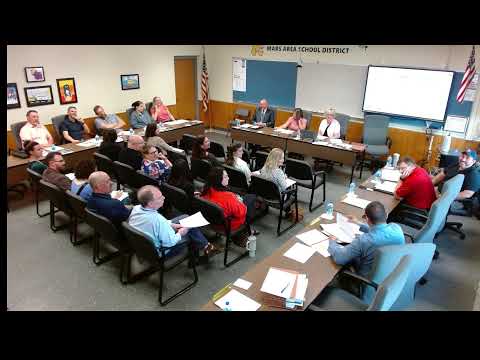
At a Mars Area School District finance meeting, district staff outlined proposed increases in special‑education spending for the 2026–27 budget, saying two recent student placements and a rise in early‑intervention services are the main drivers.
"We have seen an increase in the number of students in early intervention," presenter Debbie Frankstead said, noting the district will use $30,000 in ACCESS funds, $3,500 from IDEA, and $1,500 from the general fund to cover part of the higher costs for IU‑provided services such as early intervention, consulting, ASL training, speech and occupational therapy.
Frankstead told the committee the special‑education services line totals $662,000 for next year, an increase she said is about $187,000 and is largely attributable to two new students who moved into the district or were placed out of district and require extensive services. She also listed personal‑care aide placements, three skilled‑nursing out‑of‑district placements, translation and sign‑language interpreting needs, and $7,500 set aside for independent psychological evaluations.
District tuition categories were broken into three buckets. Frankstead said non‑public school tuition for 13 anticipated students is budgeted at $754,000 (including $63,000 for extended‑school‑year services), approved private‑school tuition for currently enrolled students is budgeted on a one‑year lag, and a $25,000 placeholder is included for alternative or Project Search placements. Overall tuition spending across categories is budgeted at $1,114,000, a $140,000 increase from the prior year.
Dr. Minard told the committee that approved private‑school slots materially reduce district costs for high‑tuition placements: "We pay 40% of that tuition. The state pays 60% of that tuition," he said, explaining why securing such slots can be fiscally significant when tuition can exceed $80,000 per student.
Board members asked for clarity about a large elementary vision‑services line, and staff said the figure reflects one elementary student who requires a full‑time aide and that the line will change as the student advances grades.
The presenters emphasized that special‑education costs can change quickly when new students enter the district or must be placed in specialized settings, and they noted contingency funds are used to respond to such unplanned placements. The special‑education discussion ran throughout the early portion of the meeting and will be included in the superintendent’s formal budget presentation next month.