Get Full Government Meeting Transcripts, Videos, & Alerts Forever!
Get email alerts on the Bylaws topic
No spam. Unsubscribe anytime.
San Mateo County Agriculture Advisory Committee debates bylaw changes on officer roles, quorum and notice rules
Summary
The committee continued a months‑long review of procedural rule amendments on April 13, 2026, keeping the farmer‑only chair/vice‑chair requirement, clarifying quorum language to exclude unfilled seats, and accepting 72‑hour notice language while raising concerns about mailed packet delivery and minute wording.
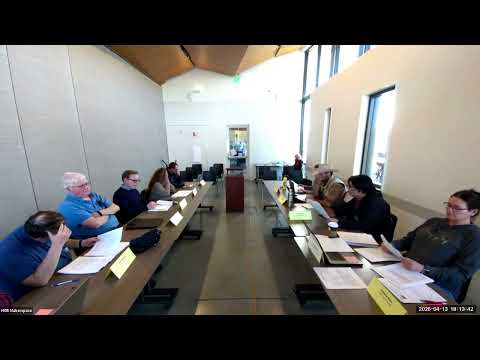
The San Mateo County Agriculture Advisory Committee on April 13 continued a detailed review of proposed amendments to its procedural rules and bylaws, focusing on officer duties, quorum counting and how meeting notices are delivered.
Members unanimously signaled they want to retain a farmer requirement for the chair and vice chair, saying agricultural experience is essential to lead an advisory body that represents farming interests. "It is extremely important that everything that we agree to or disagree in these bylaws, we don't do because we want to be the chair or because we personally want something," said Marilyn Johnson, arguing for the requirement and offering to step down if another qualified farmer sought the post.
Staff urged the committee to consider opening officer eligibility to a broader pool to make it easier to fill leadership positions. "Opening it up would increase the candidate pool; we've had trouble filling the chair in the past," County planning liaison Robbie Miller said, noting other boards and committees allow non‑farmer chairs. Members responded that any opening could create conflicts with the committee's purpose and that farmers' lived experience matters for agenda decisions.
On quorum language, county counsel and staff recommended adding wording to clarify that a quorum is a majority of "seated" positions (that is, filled seats), not a majority of the total possible seats, which would exclude unfilled vacancies from the quorum count. "If there are nine seated members, you would need five to conduct a meeting, not seven," a county staff member explained; members who recalled past practice accepted the clarification and asked staff to provide the statutory citation for the wording.
The committee also debated how special meeting notices should be delivered. Staff pointed to the Brown Act and said email notice is interpreted as acceptable under current law; some members said they prefer mailed color packets for legibility of maps and exhibits. Peter Marky pressed for mailed materials where maps are color‑coded, and staff suggested an intake form for members to state a preferred delivery method.
Other edits discussed included the deadline to submit items for the printed agenda (staff proposed changing the minimum number of days from 10 to 15 to align with packet production), the role of the secretary in preparing minutes (members preferred that the county liaison continue minute preparation rather than assigning it to an AAC secretary), and whether to relabel the section now called "resolutions" as "official acts" or "recommendations" to more accurately reflect the committee's advisory role.
No final adoption of the bylaws occurred at the meeting; staff recommended a 'temperature check' approach — agreeing conceptually on line‑by‑line changes and bringing the full, revised package back for a final vote. The committee agreed to continue discussion at a future meeting, with staff to assemble a consolidated draft incorporating the agreed clarifications.
The committee asked staff to provide citations and exact Brown Act language where the draft relies on statute and to preserve specific wording about minutes that some members felt had been dropped in prior drafts. The meeting adjourned after the committee formed a small subcommittee to test a potential alternate meeting location and agreed to table remaining bylaw items until the next agenda.