Get Full Government Meeting Transcripts, Videos, & Alerts Forever!
Get email alerts on the Surveillance Reform topic
No spam. Unsubscribe anytime.
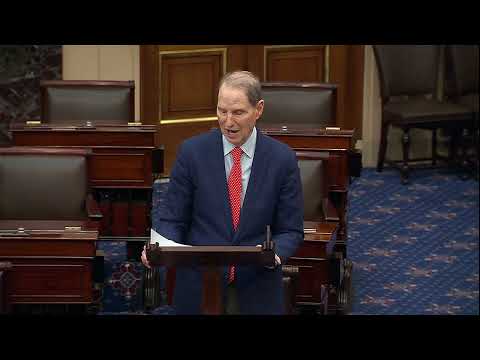
Sen. Wyden urges pause on Section 702 reauthorization, cites 'alarm bells' over warrantless searches and data purchases
Summary
Sen. Wyden, the senator from Oregon, told the Senate that Section 702 of the Foreign Intelligence Surveillance Act should not be reauthorized without statutory reforms, citing increased warrantless searches, FISA Court compliance findings and a 'data broker' loophole that allows agencies to buy Americans' location data.
Sen. Wyden, the senator from Oregon, urged his colleagues on the Senate floor to pause before reauthorizing Section 702 of the Foreign Intelligence Surveillance Act, saying the authority should not be renewed without "real reform." He warned that reauthorization without new safeguards would leave Americans vulnerable to abuse by future administrations.
"Soon we will cast important votes here in the Senate on surveillance law," Wyden said, adding, "I rise today to share some important new developments about surveillance practices of this administration, which are vital to this debate." He told senators the FISA authority commonly called Section 702 "expires on Monday," framing the vote as urgent.
Wyden outlined civil‑liberty concerns he said flow from 702's current use, saying the authority is "supposed to be an authority aimed at foreigners outside the United States" but that agencies can nevertheless conduct warrantless searches that sweep in Americans' communications. He cited examples that could be affected, including "journalists, foreign aid workers, people with family overseas, even women seeking abortion medication from a provider overseas."
He described what he called the "backdoor search loophole," saying the government is "currently allowed to trawl their way through the vast collection of 702 data to conduct warrantless searches for Americans' communications." Wyden said the FBI "increased the number of warrantless searches it conducted for Americans' communications by more than a third" last year and that the number of "sensitive, warrantless searches"—which can target elected officials, journalists and political‑organization leaders—"more than tripled during the first year of the Trump administration." He added that "the FBI has refused to say why."
Wyden also raised a separate route around warrants: purchases from commercial data brokers. Citing a recent public statement by "FBI Director Kash Patel," Wyden said the FBI had confirmed that it was buying Americans' location data. "If the government wanted to compel companies to hand over this information, it would need a warrant," he said. "But through a loophole in the law, government agencies ... can buy the sensitive information from sleazy, shady data brokers with essentially no oversight." He named agencies in that category as "the FBI, ICE, CBP and the Pentagon."
Wyden said the Foreign Intelligence Surveillance Court found "major compliance problems in Section 702" on March 17, and he said the administration is appealing that ruling. He urged that the court ruling be declassified so "Americans ought to have the ability to understand what their government is up to," and said he had prepared a classified document explaining the problem and made it available in a secure room at "Senate Security."
Turning to new technology, Wyden warned lawmakers about artificial intelligence. He said a leading A.I. company CEO "sounded this warning several years ago" that "A.I.‑driven mass surveillance presents novel risks to our fundamental liberties" and described how powerful A.I. can assemble dispersed public records and other data into detailed personal profiles at scale. He said he had written to major A.I. firms asking whether their products could be used to analyze Americans' information collected through bulk surveillance and that "none of them denied that their products could be used this way."
On remedies, Wyden said he has worked with a bipartisan, bicameral group of senators on legislation that would require the government to obtain a warrant before deliberately reading Americans' emails or texts "whether the information was collected under FISA or outside of FISA" and would close the data‑broker loophole. He urged colleagues across parties "to take some pause here" and to insist that any renewal "include real reforms, actual black‑letter text to protect Americans' privacy rights," saying senators should oppose any extension that does not include those protections.
The senator closed by urging colleagues to read the classified materials he placed in the secure room and to use that information in deciding whether to support reauthorization.
The transcript ends mid‑sentence; the record does not include a vote or further floor action in this excerpt.