Get Full Government Meeting Transcripts, Videos, & Alerts Forever!
Get email alerts on the School Budget topic
No spam. Unsubscribe anytime.
Piscataway budget presentation warns of volatile state aid, proposes 5.5% tax-levy increase
Summary
District finance leaders told the board that swings in New Jersey's state-aid formula and a 25% cut to preschool carryover forced budget choices; administrators propose using $1.1M in bank cap plus a $2.5M health-care waiver to reach a recommended 5.5% tax-levy increase, with a public hearing set for April 24.
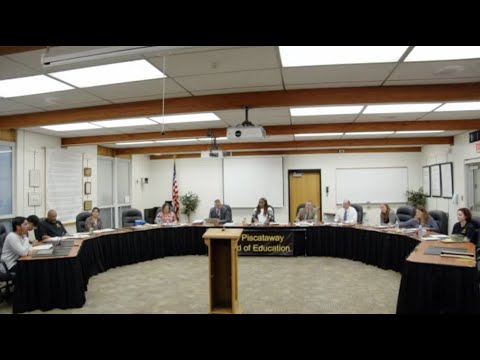
Business administrator David Olivera presented the Piscataway Township School District's preliminary budget outlook on March 13, saying sudden shifts in the state's school-aid calculation mean the district must ask taxpayers for more revenue next year.
Olivera said last year's unusual $4.8 million increase in state aid has been followed by a projected near-$800,000 reduction for 2025-26 under the S2 funding formula. "The formula is unpredictable," he said, explaining the state switched from applying an estimated special-education factor to using actual special-education counts, which reduced Piscataway's aid. He also reported the state reclaimed 25% of preschool carryover statewide; for Piscataway that reduced preschool aid by about $251,000.
Why it matters: the district is proposing a tax-levy package that combines the 2% cap, use of $1.1 million in bank cap and a health-care-cost waiver the administration estimates at about $2.5 million. Olivera said that combination would produce a recommended levy increase of about 5.5%. "We're recommending this year that we use 1.1 million of Bank cap," he told the board.
The presentation included specific impacts for taxpayers: for an average assessed home of $520,000 the district estimates the school portion of taxes would rise by roughly $4,988 annually under the proposal. Olivera framed the ask as a response to the gap between the state's adequacy budget and the local fair share the formula now computes: "we're $39.5 million short in our tax levy," he said when describing long-term formula-driven shortfalls compared with the state's adequacy numbers.
Administrators also outlined categorical drivers of rising costs: increasing special-education enrollments and one-to-one nursing needs; rising health-benefit costs (which factor into the health-care waiver); transportation and charter-school tuition transfers; and recurring technology replacement costs such as the iPad rotation program. Olivera said staffing requests built into the budget total 7.5 full-time-equivalent positions, including four bilingual teachers and an autism teacher contingent on enrollment changes.
On capital spending, the district said it will continue to rely on capital reserve rather than bonding for several projects: completion of the high-school media center renovation and acoustical upgrades, gym bleacher replacement, burglar-alarm upgrades, and phased solar-panel replacements. The administration reported about $29 million in capital reserve but cautioned that large projects (bathroom renovations, roofing, solar replacements) would rapidly deplete that balance.
Next steps: the administration asked the board to approve submission of the preliminary budget to the county; that submission was scheduled to occur immediately following the meeting and the public hearing and potential adoption were placed on the calendar for April 24. The business administrator said the district will post friendly-budget materials after the board's submission.
Quotes: Olivera emphasized unpredictability in state aid and the limited tools available locally: "the formula is unpredictable" and "if we wanted to go back to funding projects ... we would have to do a referendum." Superintendent Frank Vanelli framed the budget discussion as focused on protecting programs and services for students while being mindful of taxpayer impacts.
What remains uncertain: the final state-aid numbers, the exact size of any health-care waiver award, and whether the district will need to ask voters to exceed the cap in a future referendum. Final adoption, adjustments and the county review occur between submission and the April hearing.