Get Full Government Meeting Transcripts, Videos, & Alerts Forever!
Get email alerts on the Wireless Facility topic
No spam. Unsubscribe anytime.
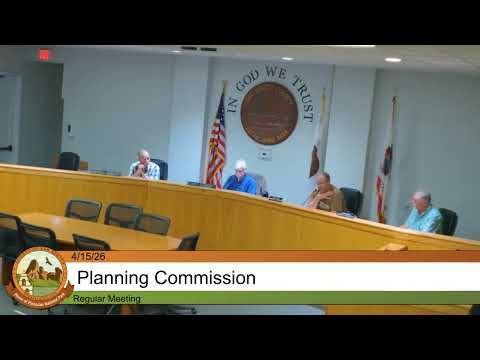
Planning commission continues review of proposed Verizon tower after design and condition disputes
Summary
The San Benito County Planning Commission continued a conditional‑use permit for a proposed Verizon wireless tower after commissioners and residents raised concerns about appearance, photo simulations, and several conditions of approval including road improvements and defensible‑space requirements.
The San Benito County Planning Commission on May 12 continued consideration of a conditional‑use permit for a proposed Verizon wireless facility located roughly 3.4 miles north of Hollister.
Planning staff opened the item by summarizing applicable standards (county wireless facility standards, chapter 7.11), noting the applicant’s claim the project qualifies as a utility extension under the California Environmental Quality Act and recommending adoption of a resolution to approve the permit. Staff also noted one written public comment raising aesthetics and disputing the applicant’s coverage claims.
Kevin Gallagher, representing Towers of California LLC and speaking for Verizon, presented coverage maps and photo simulations showing a 77‑foot monopole (about 82 feet counting the lightning rod). Gallagher said the structure was engineered to Verizon specifications, would allow space for future collocators and would comply with FCC RF safety guidelines (applicant stated exposure at roughly 10 percent of allowable limits). He told commissioners the nearest residence is about 600 feet away and that alternatives such as water‑tank or bespoke stealth designs either would limit future collocation or would require greater cost and structural tradeoffs.
Opponents and at least one public commenter argued the photo simulations understate the visual impact and urged a design other than a plain monopole. Commissioners asked detailed questions about photo‑simulation vantage points, whether a monopine or alternative stealth design could be used (Gallagher said a monopine would require roughly an 8‑foot height increase to preserve tapering), generator noise and maintenance fencing, and whether required conditions—including a 100‑foot defensible‑space requirement and road‑widening/dedication along Fallon and Fairview—had a legal nexus to the modest, infrequently visited facility.
Gallagher requested removal of two conditions of approval that would require extensive road widening/dedications and asked that the 100‑foot defensible‑space condition be replaced with language requiring compliance with applicable fire regulations; he said CalFire can waive certain SRAs exceptions for noncombustible structures. He also offered to provide additional photo simulations and to accept a continuance if the commission wanted further information.
Given outstanding questions about visual simulations, the public comment letter, and the scope and legal nexus of some conditions, a commissioner moved to continue the item. The commission voted to continue the wireless‑facility matter to a date uncertain so the applicant can supply additional visual simulations and staff can clarify recommended conditions and related public‑works requirements.
Next steps: the commission set no new hearing date and directed staff and the applicant to return with the additional simulations, any requested technical clarifications, and a clear list of conditions for commission review.