Get Full Government Meeting Transcripts, Videos, & Alerts Forever!
Get email alerts on the Data And Humanitarian Monitoring topic
No spam. Unsubscribe anytime.
WFP unveils 'Hunger Map Live' to track global acute hunger in near real time
Summary
The World Food Program demonstrated Hunger Map Live, a new interactive platform that maps current and historical food‑security indicators, highlights hunger hotspots and includes proprietary short‑term AI predictions for planning; presenters emphasized data transparency and noted persistent funding shortfalls.
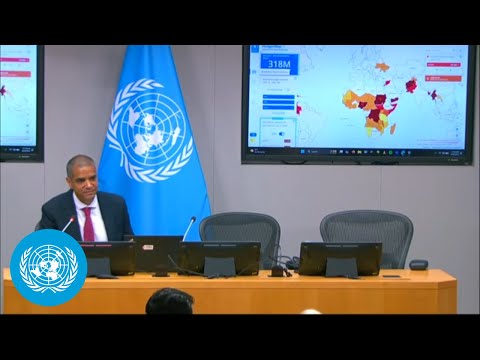
The World Food Program on Thursday launched Hunger Map Live, an interactive data and intelligence platform meant to show where and why people are experiencing acute hunger and to provide forward-looking analysis for planners and journalists.
Jean‑Martin (Director of Food Security and Nutrition Analysis, World Food Program) told correspondents the map shows 318 million people worldwide facing acute hunger and lets users compare those figures with pre‑COVID levels of roughly 150 million. “Food security is dynamic,” he said. “Hunger is a problem that can be predicted and that where responses can be anticipated.”
The platform aggregates multiple layers of analysis that Jean‑Martin said are produced by roughly 300 WFP specialists worldwide, including food‑consumption surveys, market and price data, climatic indicators and conflict analysis. It marks countries at risk of famine with red bullets and identifies hunger hotspots the agency and the Food and Agriculture Organization highlight in joint reports published every six months.
Jean‑Martin walked through example layers on the live display, pointing to climate stressors such as Somalia’s drought, economic drivers including food inflation and exchange‑rate movements, and a nutrition view for micronutrient (‘hidden hunger’) deficits. He credited the Gates Foundation with helping to produce micronutrient data and said the map includes an economic scenario that estimates about 45 million additional people could fall into acute hunger if oil prices stay above $100 through the end of June.
The platform also contains AI analytics that produce internal 30–90 day food‑security predictions for select countries; Jean‑Martin said those short‑term estimates are not public “because we’re trying to be as responsible as possible with our implementation of artificial intelligence.”
WFP encouraged journalists and policymakers to explore the site at hungermap.wfp.org. Jean‑Martin said the tool is intended to increase transparency about global needs and to help users identify where humanitarian attention and resources are required.
The session ended with a question period in which WFP representatives emphasized that the numbers shown on the landing page are vetted in partnership with other agencies and national authorities.