Get Full Government Meeting Transcripts, Videos, & Alerts Forever!
Get email alerts on the Land Use topic
No spam. Unsubscribe anytime.
Coconino County planning commission unanimously approves expanded overnight lodging at Roden Crater
Summary
On March 25, 2026 the Coconino County Planning and Zoning Commission approved CUP26-006 to raise overnight capacity at Roden Crater from 8 people (4 units) to 66 people (33 units), after staff presentation, applicant testimony, public support from Hopi and artists, and discussion about emergency and weed-management conditions.
The Coconino County Planning and Zoning Commission voted unanimously on March 25 to approve CUP26-006, allowing the Roden Crater site to expand overnight lodging from eight people in four units to 66 people in 33 units. The decision followed a staff presentation, testimony from project representatives, three public speakers in support, and a commissioners’ discussion about public-safety and land-management conditions.
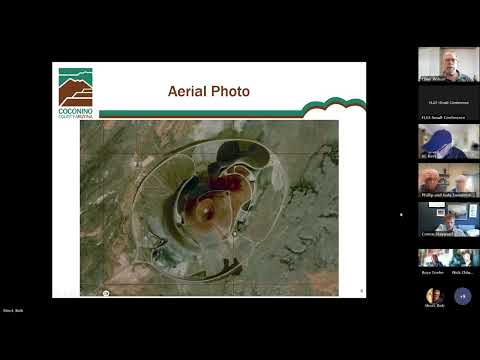
Planning staff told the commission the 640-acre Roden Crater property, owned in part by Skystone Foundation, had prior approvals for lodging and related facilities but not for the 33 units now under review. "Staff recommends approval of CUP26-006 with the recommended conditions," planning staff said during the presentation.
Applicant representatives said overnight stays are integral to experiencing the land-art installation by artist James Turrell and to the project’s educational mission. Architect and project manager Ud Goell said the lodges are designed to sit in the landscape with no uplighting and that guests will be parked off-site and shuttled in to keep access roads clear for emergency vehicles. "Overnight lodging will allow visitors to witness these phenomena at their peak," Goell said.
Three members of the public spoke in support. Philip Towallet Stwa, a Hopi descendant and geodetic scientist, told the commission that "to be fully experienced, one must stay overnight" at Roden Crater. Visual artist Judy Toualit Sta said, "The overnight experience is not an amenity. It is part of the work itself." Former ranch manager Jim Parks described long-term stewardship of the land and said the project would rely on on-site wells and independent power.
Commissioners focused discussion on emergency response, fire suppression and invasive-plant management. Staff and the applicant confirmed the site includes two ponds, two wells and a gravity-fed water tank; a slide error was corrected during the meeting to show a 300,000-gallon tank. Planning staff indicated the Emergency Operations Plan (EOP) must be fully implemented before Certificates of Occupancy are issued. The applicant also noted a helipad approved in 2019 and said local emergency services had been briefed on the plan.
Vice Chair Best proposed adding three conditions before final adoption: a permanent, staff-approved weed-management plan; a bulletin board on site that includes leave-no-trace guidance and a map noting Grand Falls is off-limits; and an EOP appendix listing emergency skill sets and equipment to be maintained on site. Commissioners debated whether some elements should instead be addressed at the code or policy level. A majority did not adopt all three additions; the commission proceeded to a final motion to approve the CUP as presented.
The motion to approve CUP26-006 passed on a roll-call vote with all voting commissioners recorded in favor. Chair Wilson called the meeting to a close at 6:25 p.m.
What happens next: The commission’s approval is a recommendation for any zone changes and otherwise a final action for the conditional use permit as recorded; parties may pursue any procedural appeals within the time allowed by county rules.