Get Full Government Meeting Transcripts, Videos, & Alerts Forever!
Get email alerts on the Land Use topic
No spam. Unsubscribe anytime.
Jessamine County magistrates recommend rezoning 69–70 acres for single‑family development despite resident traffic concerns
Summary
Magistrates voted to recommend changing roughly 69–70 acres owned by College Hill Investments from C7/R7 to UC1 after an applicant presentation and a traffic impact study; residents warned Highway 52 is congested, questioned legal notice and worried the conceptual 192‑lot layout would strain schools and rural life.
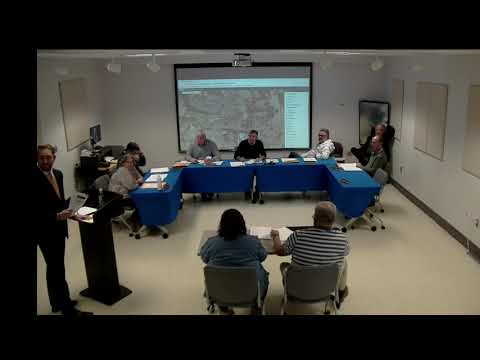
Jessamine County magistrates voted on March 18 to recommend approval of a zoning change for roughly 69–70 acres owned by College Hill Investments, advancing the proposal to fiscal court despite sustained public opposition over traffic, school capacity and neighbor notification.
The board heard from an attorney for the applicant, the property owner identified as Bruce, and the project's traffic engineer, Mark Mintosh. The applicant described the requested change from C7 and R7 to UC1 as consistent with the county comprehensive plan’s guidance for low‑density single‑family development along the urban corridor and said the concept plan in the record represents a maximum potential layout, not a final subdivision plat. The applicant’s attorney told magistrates the same parcel had been before fiscal court previously and said the new traffic study and other changed circumstances justify reconsideration.
The engineer said the team completed two days of traffic counts and found the planned intersection would meet accepted sight‑distance and operate at an acceptable level of service. “As proposed the intersection would have an acceptable level of service of C,” said Mark Mintosh, the project’s traffic engineer, who added that most recorded crashes in the five‑year review occurred north of the proposed access and that the study did not indicate a material change in peak‑hour operations.
Residents disputed that assessment in public comment. Multiple neighbors said notices under KRS 100.212 arrived late or not at all and asked for clarification about use language in the packet that referred to attached single‑family, multifamily or senior housing. One resident said the packet’s conceptual layout showed “192” potential lots; neighbors repeatedly emphasized that the map presented to the board was a nonbinding concept but said the depiction still alarmed them.
“School’s already crowded,” a resident told the board, saying a new school in the area would not eliminate traffic concerns and estimating that a large subdivision would add dozens of children. Another commenter who identified himself as Jason said denser nearby housing would bring trespass and noise and would change the farming character of the area.
The applicant acknowledged sewer capacity letters from Jessamine County Utilities and the Northern Jessamine County Sanitation District are in the record but stressed that final engineering will determine whether lots are served by sewer or septic. The attorney told magistrates the displayed plan was a developer’s ‘best‑case’ concept used for traffic analysis, and that actual lot counts could be substantially lower depending on engineering constraints.
Magistrates debated the policy trade‑offs and local impacts before a motion to recommend approval. One magistrate urged that single‑family zoning would be a better alternative than multifamily or commercial uses that could be proposed later: “The best thing I can do for you is to give you single family residential area down there,” the magistrate said before voting to move the recommendation to fiscal court.
The board recorded votes announced in open session, with Adams and Kenny named among those voting in favor; the motion carried and the recommendation will go to fiscal court for final consideration. No final subdivision or construction permits are approved by this recommendation; the applicant must complete subsequent engineering, site plans, and any required public hearings for subdivision approvals.
The meeting concluded after a short departmental update and closing remarks. The fiscal court will consider the magistrates’ recommendation in its own session; the timing of that hearing was not specified at the meeting.