Get Full Government Meeting Transcripts, Videos, & Alerts Forever!
Get email alerts on the Board Of Regents Appointments topic
No spam. Unsubscribe anytime.
Lawmakers debate limiting governor’s regent appointments amid pay‑to‑play allegations
Summary
An amendment to HF4252 that would have limited gubernatorial appointments to Board of Regents seats to candidates vetted through the legislative process was debated amid allegations of conflicts and donor influence; the amendment failed on a 7–7 vote after members raised potential constitutional concerns.
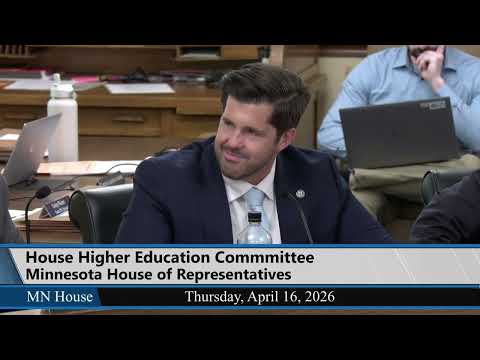
A contentious exchange over appointments to the University of Minnesota Board of Regents surfaced during Higher Education Finance Committee consideration of HF4252 on May 12 when Representative Eric introduced an amendment to narrow who the governor may appoint to certain regent vacancies.
Representative Eric argued the amendment would protect the integrity of the Regents selection process after two gubernatorial appointees, he said, appeared to have conflicts: one widely reported as a major campaign donor and another described as a close household associate of a top staffer. "There were two members of the public that were unknown to us ... one was a major donor," Representative Eric said, calling the appointments an "abuse of power" and urging the Legislature to prevent similar future appointments.
Opponents questioned whether the amendment impermissibly constrained the governor’s appointment authority. Representative Klevorn and staff counsel Mr. Atkins raised constitutional concerns with language that would require the governor to appoint only those candidates recommended by a Joint Legislative Committee or a vetting advisory committee. "We had that constitutional issue with that," Representative Klevorn said, and Mr. Atkins told members the University of Minnesota’s charter and the state Constitution leave open legal questions about the Legislature’s ability to limit the governor’s appointment power.
Other members framed the dispute as a pay‑to‑play concern rather than strictly a constitutional question. Representative Coulter later offered an amendment barring candidates for Regents who, in the previous two years, contributed to legislative caucus campaign committees or leadership campaign committees; proponents argued the change would reduce incentives for political contributions to influence appointments. Opponents said the proposal had not been vetted in committee and would not directly address the governor’s appointment power.
After sustained debate, the amendment to limit gubernatorial appointments failed on a 7–7 roll call. Additional related amendments aimed at restricting donor influence or limiting who could be recommended by legislative vetting processes also failed on tie votes.
Committee members said they plan further work outside the floor of the committee, including potential refinements in Ways and Means or other forums, and some suggested continuing bipartisan discussions to craft language that would address conflicts of interest without raising clear constitutional questions.