Get Full Government Meeting Transcripts, Videos, & Alerts Forever!
Get email alerts on the Opioid Settlement Guidance topic
No spam. Unsubscribe anytime.
State AG staff and ISAC tell Iowa counties to prioritize treatment, prevention and good‑faith allocations for opioid settlement funds
Summary
At a statewide ISAC webinar, Iowa Attorney General staff and county officials reviewed permissible uses of opioid settlement money, stressing that at least 75% should fund core strategies (treatment/prevention), there is no fixed statewide spending deadline, and counties should document good‑faith allocations for mixed‑use programs.
Lindsay, the session host, opened a statewide ISAC webinar for county leaders and introduced William Pearson of the Iowa Attorney General's Office as a resource for questions about opioid settlement funds. The session brought county officials together to share examples and practical approaches for using settlement dollars.
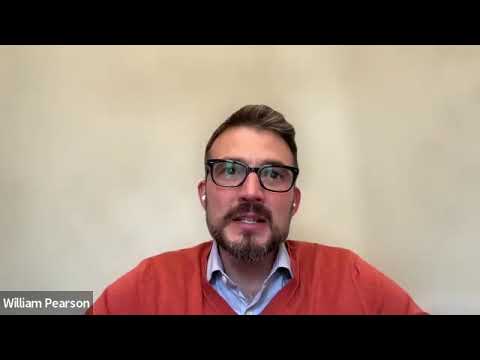
William Pearson, representing the Attorney General's Office, said counties have flexibility on timing but must follow the settlement agreements' limits on permissible uses. "There's no time frame" for when counties must spend their settlement shares, Pearson said, adding that restrictions apply to how funds are used rather than when they must be spent. He noted that the parties to the settlements have agreed that at least 75% of funds should go toward core strategies (treatment and prevention in Exhibit A), with up to 25% available for other approved activities under the settlement exhibits.
County participants and chat comments described how smaller or rural counties are deploying funds. Katie Flint posted that her county created a task force including the auditor, public health, sheriff, mental‑health personnel and police chiefs to discuss options and recommend spending to supervisors. Richard Crouch of Mills County said his task force purchased a $15,000 field app for sheriff phones to improve officer safety and access to information, and several counties reported buying Narcan for first responders, EMS equipment related to overdose response, and educational or prevention programs in local schools.
Participants asked whether mixed‑use programs—such as a nurse whose caseload includes only a portion of opioid‑related cases—could be funded. Pearson recommended estimating the percentage of time devoted to opioid‑related work and funding that portion with settlement dollars, keeping written justification. "Make a good faith effort to estimate," he said, offering the example of funding 25% or 50% of a nurse's time if that proportion relates to opioid response.
Questions about law‑enforcement purchases came up repeatedly. When asked whether a drug dog or a body scanner would be permissible, Pearson said those purchases generally look like law‑enforcement expenses rather than treatment or prevention and are likely not appropriate uses of settlement funds. He contrasted that with law‑enforcement–adjacent uses that support treatment and overdose response—such as providing Narcan to officers or training on overdose recognition—which he identified as acceptable.
Pearson also summarized state‑level decisions shaping resources: the legislature allocated 75% of the state's share of settlement funds to the Iowa Department of Health and Human Services and 25% to the Attorney General's Office. Both agencies are building grant processes after receiving funding in July and will jointly report annually to the legislature on how the money is spent, including county allocations.
Other practical ideas raised by participants included assembling "go‑home" bags with Narcan and resource information for people leaving jail, supporting juvenile drug court and diversion programs (identified as covered under Exhibit E), and forming multi‑stakeholder review committees that recommend proposals to boards of supervisors. Several speakers stressed that, in smaller counties, it can be useful to pool resources regionally or to open grant opportunities to local first responders and community partners.
The host said ISAC will post the webinar recording and chat, and the team plans to compile a spreadsheet of county spending examples to publish on the ISAC opioid webpage for reference. William Pearson encouraged county attorneys to call the Attorney General's Office for case‑specific legal questions, noting he cannot provide direct legal advice to counties on individual transactions but can discuss the issues and accept inquiries.
The webinar closed with offers to share templates and aggregated annual reports so counties can see how peers are spending funds and avoid redundant investments. The follow‑up materials will include the chat and a list of practical uses counties reported exploring.