Get Full Government Meeting Transcripts, Videos, & Alerts Forever!
Get email alerts on the Housing topic
No spam. Unsubscribe anytime.
Solvang accepts 2025 housing report as council presses staff on RHNA accounting
Summary
The Solvang City Council voted 5-0 to receive and file the 2025 annual housing and general-plan report. Staff said the city's sixth-cycle RHNA target is roughly 191 units through 2031, noted recent pipeline swings and explained ADU crediting methods; councilmembers pressed for clarity on income-band calculations.
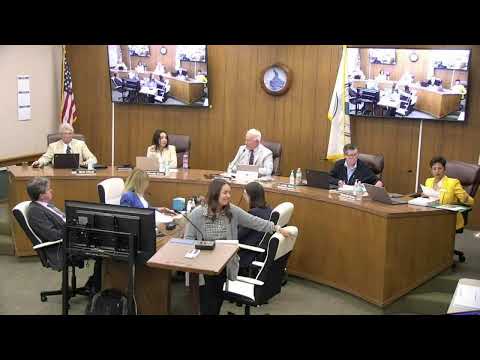
The Solvang City Council on April 13 accepted staff's 2025 annual housing and general-plan report and directed staff to file it with the state.
Planning staff told the council the city's target under the sixth-cycle Regional Housing Needs Assessment (RHNA) is "approximately 191 units" to plan for through 2031, and summarized local production and the development pipeline. Raphael, the presenter, said 32 units had been permitted through 2025 and that a number of larger projects were in varying stages: an earlier entitlement tally of 106 units had, he said, increased to about 194 the prior week but could fall again as projects change. Raphael also described four rezoned sites (called sites B, C and D in the staff material) and a large proposal at Alisal Glenn of roughly 88 units.
Why it matters: the RHNA target is split across income bands (very low, low, moderate and above-moderate) and the state evaluates both numeric progress and whether jurisdictions enacted required programs to reduce barriers to housing. Raphael explained that the city is using an ABAG-methodology to assign ADU credit to income bands based on ADU sizes and that some pipeline shifts reflect projects that paused or dropped off for economic reasons.
Council questions focused on enforceability and counting. Members asked whether the city is obliged to meet the income-band distribution exactly or whether the state looks at overall effort and programs; staff said the city is judged on both numeric results and programmatic steps and noted the absence of a citywide inclusionary ordinance that would require a developer-setaside. Council members also pressed for clarity on ADU accounting and whether deed restrictions or project approvals would lock units into affordable categories.
Public comment flagged a data inconsistency. Resident John Steel pointed out that a slide showing the RHNA spread summed to 181 units, not 191; staff acknowledged the comment and said they would verify the calculations and return with corrected figures if necessary.
What the report shows: - RHNA sixth-cycle target: ~191 units through 2031 (staff presentation) (Raphael). - Permitted in 2025: 32 units. - Pipeline: several projects in entitlement or review (previously reported 106; staff said this rose to ~194 the prior week but may change). - Notable project status: Alamo Pentado (previously counted) dropped off the pipeline because of financing/parking costs; Alisal Glenn (~88 units) is active and posted for preliminary SB 330 review; smaller projects (e.g., Frederick Square adaptive reuse, 6 units) are pursuing completeness and planning review.
Action: The council voted to receive and file the report, 5-0; staff was directed to submit the required documentation to state agencies and to follow up on the numeric discrepancy raised in public comment.
What comes next: staff said it will continue to refine pipeline counts, post updates to project web pages and return with any corrected RHNA arithmetic or clarifying material about ADU-crediting and deed-restriction approaches.
Sources: staff presentation by Raphael; public comment from John Steel; Council roll-call vote (5-0).