Get Full Government Meeting Transcripts, Videos, & Alerts Forever!
Get email alerts on the Military Training topic
No spam. Unsubscribe anytime.
Alaska housing leader says military training mission flew 39 tons of materials to remote North Slope communities
Summary
Griffin Hegel Forester, executive director of the Association of Alaska Housing Authorities, said an Innovative Readiness Training mission delivered 39 tons of construction materials to two remote North Slope communities about 700 miles north of Anchorage, reducing logistic costs and giving Kentucky Air National Guard members cold-weather training.
Griffin Hegel Forester, executive director of the Association of Alaska Housing Authorities, said an Innovative Readiness Training mission delivered 39 tons of construction materials to two remote North Slope communities roughly 700 miles north of Anchorage, providing both needed infrastructure support and training for military personnel.
Forester, who said he previously served about six years as CEO of the Tagay Yumilu and Nudu Housing Authority on the Arctic Slope of Alaska, described the decision to apply for the mission as driven by the communities’ needs and the value of shared logistics. “What motivated us to apply for an innovative readiness training mission was the need and then the value we saw in that type of exercise where it's a win for the community,” he said.
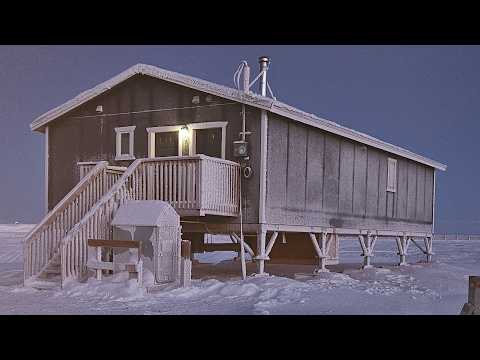
He told listeners that logistics are a major driver of cost for remote projects — “logistics can easily be 20 to 35% or more of the cost of some really remote projects” — and that the military transport removed that obstacle for this work. Forester said the delivery totaled 39 tons of materials sent to two communities across a region he described as “the size of Minnesota” with no road access and much colder conditions.
Forester credited the Kentucky Air National Guard with the transport and described benefits on both sides: “Every service member we spoke to on that project was so thrilled to do it… and these tribal communities up on the North Slope of Alaska gave them really valuable real world, you know, cold weather operating experience,” he said. He added that the arrangement was also “a win for the American taxpayer.”
The testimony framed the IRT mission as a logistical and training solution for very remote communities; Forester emphasized both the material delivery and the operational experience gained by service members. He did not specify the names of the two recipient communities, the exact dates of the deliveries, or whether the materials were tied to a specific construction contract or local program.
Forester’s remarks came as a description of a completed IRT delivery rather than a formal board action; no votes or motions were recorded in the transcript. The testimony highlights a model in which military logistics are used to support rural infrastructure work while also providing training opportunities for service personnel.