Get Full Government Meeting Transcripts, Videos, & Alerts Forever!
Get email alerts on the Municipal Court topic
No spam. Unsubscribe anytime.
Arvada Municipal Court reports caseload growth, One Small Step housing successes and urgent need for a court marshal
Summary
Judge Katie Kurtz told council the court saw rising caseloads (about 7,700 cases in 2025; ~2,700 in Q1 2026), expanded probation and diversion partnerships, and pressing security gaps — including missing fingerprinting capacity that she said prevents recording some convictions — and asked for a permanent court marshal and live-streaming fixes.
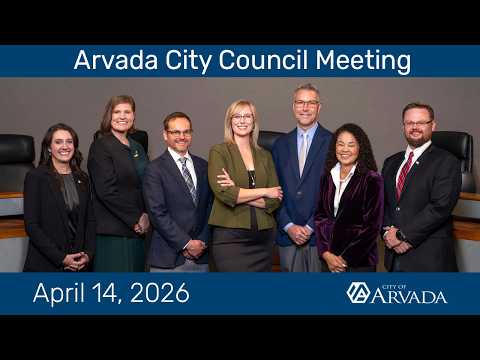
Judge Katie Kurtz delivered the Municipal Court annual update at the Arvada City Council meeting on April 14, reporting rising caseloads, expanded diversion and housing partnerships, and operational shortfalls that she said create public‑safety and recordkeeping risks.
"Our purpose is to support the community and to provide community safety for our community," Kurtz said, framing the court’s mission before laying out 2025 metrics and program outcomes.
Caseloads and projections: Kurtz reported about 7,700 cases in 2025 and roughly 2,700 cases in the first quarter of 2026. "If we stay on that same track, we will hit about 10,800 cases this year," she warned, linking the increase to a fully staffed police department and legislative changes that allow municipalities to handle motor‑vehicle registration violations (House Bill 25-1112).
Probation and One Small Step (OSS): The court highlighted the One Small Step program — a 12‑month, phased supervision program focused on housing stability — as a key intervention. Kurtz said 372 people have participated in OSS since its inception; 84 were active participants at the time of the presentation and 65 people had been housed through partnerships with nonprofit providers. She described anonymized success stories, including a participant with dozens of prior cases who obtained housing, employment and sustained sobriety after engaging with case managers and partner programs such as Suburban Studios, Safe Side and Mirror Image Arts.
Court administration, paperless operations and technology needs: Kurtz said the court is now paperless for new cases and can track detailed process timings from check‑in to courtroom. She said the current legacy case management software (a system from the 1990s) must be replaced and that funds are being held to implement a modern system.
Security and recordkeeping shortfalls: Kurtz urged council to fill a permanent court marshal position, citing repeated in‑court safety incidents and limitations in recording convictions. She said that when the court cannot collect biometric identifiers (fingerprints), convictions are not recorded with the Colorado Bureau of Investigation: "What that means for us is currently none of our criminal convictions are recorded," she said, framing it as a significant administrative and public‑safety concern tied to staffing. She described a recent incident in which a disruptive juvenile damaged court property and the need for faster on‑site security responses.
Fines, fees and revenue: Kurtz reviewed revenue numbers and reiterated that municipal court should not be a revenue generator. "I am not allowed to be a revenue generating source," she said, and described ongoing revisions to fines and fees that aim to align charges with operational costs, fairness and comparable municipal practice.
Council response and next steps: Councilmembers praised the OSS program, supported the request for a court marshal and discussed enforcement options for e‑bike violations and fines as deterrents. Judge Kurtz and staff committed to follow up on live‑streaming fixes, implementation timelines for upgraded case management software, and detailed proposals for addressing court security and fingerprinting so convictions are properly recorded.
Next meeting action: staff indicated live streaming work is on a short timeline to meet legislative requirements and that council will see budget/implementation proposals for technology and security staffing in upcoming meetings.