Get Full Government Meeting Transcripts, Videos, & Alerts Forever!
Get email alerts on the School Outreach topic
No spam. Unsubscribe anytime.
Josephine County outreach officers describe prevention work in Three Rivers schools
Summary
County prevention staff and school outreach officers briefed the board on a program using prevention specialists integrated with juvenile-justice services to address vaping, marijuana and absenteeism through relationship-building, alternative-to-suspension approaches and evidence-based curricula.
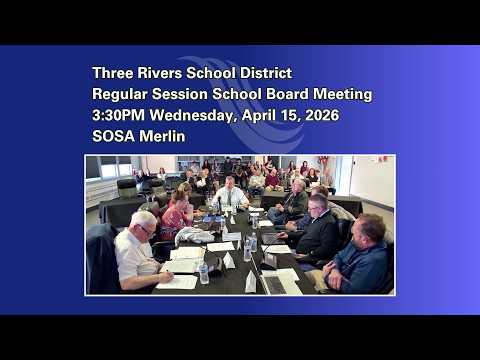
Josephine County prevention leaders and school outreach officers presented the county’s school outreach program to the Three Rivers School Board on April 15, describing how the team supports students, schools and families.
Sean Martinez, Josephine County Prevention and Treatment Services Manager, said the program started as a pilot in 2019 and blends prevention specialists with juvenile-justice liaisons. Funding initially came from marijuana-tax revenue, then state prevention funds and more recently opioid-settlement dollars. The outreach officers are embedded on school administrative teams and provide relationship building, family support, truancy intervention, re-engagement work, and evidence-based prevention curricula focusing on vaping, marijuana and alcohol.
Officer Josh and colleague Robin described the data they use (the Student Health Survey) and said district rates for past-30-day nicotine, alcohol and marijuana use in some grades exceed state averages. Officers outlined interventions including cessation classes for students who decide to quit vaping, peer education (high-schoolers working with middle-school students), home visits, supplies (alarm clocks, gas for transportation) and alternatives to out-of-school suspension.
Staff highlighted a preventive approach that emphasizes keeping students in school and using in-school interventions rather than exclusionary discipline, and said their work includes year-round supports and event-based outreach (Red Ribbon Week, safe-driving assemblies). Presenters reported 1,154 student contacts documented via notes between the start of school (Aug. 25) and Feb. 28, citing 674 individual student contacts and repeat meetings for many students.
District leaders and trustees asked for outcome measures tying interventions to behavioral trends; presenters said trend data showing declines in substance use since 2006 exist but a missing slide prevented that chart from appearing in the packet; they offered to supply that trend data to trustees.
Next steps: Officers will provide follow-up documentation showing outcomes trends and continue coordinating with schools on attendance and prevention programming.