Get Full Government Meeting Transcripts, Videos, & Alerts Forever!
Get email alerts on the Brownfields topic
No spam. Unsubscribe anytime.
RDA holds ABCA hearing and approves recommendation to use EPA revolving loan funds for Fire Station Flats cleanup
Summary
City consultants outlined three cleanup alternatives for the former Badger Sheet Metal / Fire Station Flats site and recommended targeted excavation and reuse during redevelopment; the RDA then approved staff’s recommendation to pursue an EPA revolving‑loan fund loan for remediation oversight and implementation.
The Redevelopment Authority held a public hearing on an Analysis of Brownfield Cleanup Alternatives (ABCA) for the former Badger Sheet Metal site at 12 South Broadway and heard from city consultants about proposed cleanup approaches and costs.
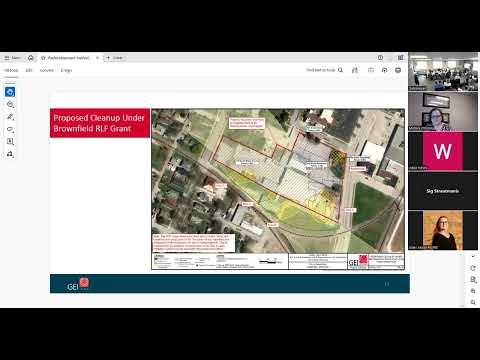
Roger Miller, a professional geologist with GEI Consultants, and colleagues described site contamination including polycyclic aromatic hydrocarbons (PAHs) and metals such as arsenic and lead. Miller said previous EPA‑funded work removed roughly 13,600 tons of soil and that the next phase focuses on targeted excavation, soil management, capping and ongoing monitoring as required by state and federal oversight.
Consultants presented three alternatives: monitored natural attenuation (low cost but leaves contamination in place); removal and off‑site disposal of impacted soils to a 4‑foot depth (presented as higher cost, described in the presentation at roughly $3.4 million); and a recommended targeted removal with on‑site reuse and engineering controls integrated into the redevelopment (consultant estimate: about $960,000). Quinn Lens of GEI said the third alternative balances cost and DNR cleanup expectations and would be implemented through a material management plan and DNR approvals.
After the hearing, staff asked the RDA to serve as the approving body for a loan under the EPA Brownfields Revolving Loan Fund to support remediation activities at the site. Staff described a recommended loan structure: a 2% fixed rate, 20‑year term, subordinate mortgage security and repayment from available project cash flow; staff also said the borrower would provide at least 20% non‑federal match and that funds would be reimbursed on a reimbursement basis after eligible activities and documentation are submitted.
The RDA moved and approved the staff recommendation by voice vote. The motion carried; no roll‑call tally was recorded in the transcript. Staff noted additional EPA and DNR requirements would need to be satisfied before reimbursements were made.
What happens next: consultants will take public comments, finalize the ABCA and prepare a decision memorandum selecting an alternative for EPA review. The city will work with the developer and consultants to prepare a material management plan and obtain DNR approvals before implementation.