Get Full Government Meeting Transcripts, Videos, & Alerts Forever!
Get email alerts on the Curriculum Adoption topic
No spam. Unsubscribe anytime.
District staff recommend Amplify CKLA for K–5 ELA; board presses for follow‑up and pilot data
Summary
District instructional leaders recommended adopting Amplify Core Knowledge Language Arts (CKLA) as the K–5 tier‑one ELA curriculum, citing alignment with the science of reading and Michigan Public Act 146; trustees asked for pilot results, clarity on costs and regular updates before final approval.
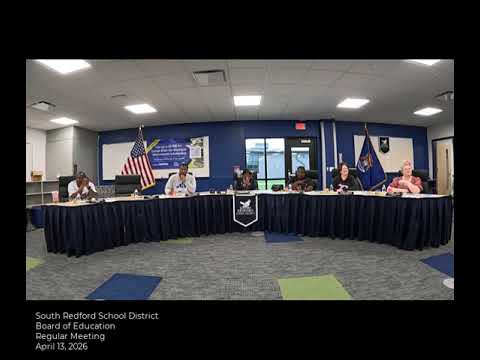
District curriculum staff presented a proposed K–5 English language arts adoption to the South Redford Board, recommending Amplify Core Knowledge Language Arts (CKLA) as the district’s approved tier‑one ELA curriculum.
Amy Davidson, the district’s curriculum, instruction and assessment director, and Michelle Chase, an ISD literacy coach, explained that the recommendation responds to recent state requirements about screening and approved tier‑one materials under Public Act 146 and to federal/state grant opportunities. “Science of reading is not a philosophy. It’s accumulated scientific evidence of how we can best support our students to learn to read,” Michelle Chase said, describing the curricular need for systematic, explicit word‑reading instruction plus knowledge‑building for comprehension.
District staff described the review process: they compared approved vendors on the state list, convened teacher review teams, and asked a group of teachers to pilot a unit. Staff said teacher reviewers favored CKLA’s integrated approach to phonics, decodable readers, background‑knowledge building and embedded writing instruction. A teacher who reviewed the materials told trustees the “scope and sequence makes a lot more sense than what we’re currently doing.”
Cost and funding were a central line of questioning. Presenters pointed to a three‑year cost estimate and to grant funds that could be used to offset purchase and professional learning; presenters referenced a roughly three‑year cost figure in the board packet and said a literacy grant (section often referred to in the discussion as 35mm/committee funds) could provide about $277,000. Trustees noted the packet contains different numeric references and asked staff to confirm final pricing and the portion that would require general fund support.
Several trustees expressed unease with the compressed timeline. Trustee Amanda Flesher and others said the board had not received routine updates on previous curriculum adoptions and asked staff to return with a concrete timeline for piloting, implementation and a March (following school year) check‑in so trustees can see early outcome data. Trustee Daniel Winston, speaking both as a trustee and a parent, stressed urgency about raising fifth‑grade outcomes and asked for measurable benchmarks during rollout.
Staff said a staggered plan is possible: a district pilot unit (several grades and classrooms), targeted professional development, and a full implementation planned to begin in September if the board approves procurement at an upcoming meeting. Staff asked the board to consider the recommendation and indicated they would bring a formal adoption request and clarified cost figures to the board for a vote within the district’s procurement timeline.
No formal adoption of CKLA occurred at the meeting; trustees directed staff to return with clarified cost figures, pilot results and periodic implementation reports.