Get Full Government Meeting Transcripts, Videos, & Alerts Forever!
Get email alerts on the Housing topic
No spam. Unsubscribe anytime.
Planning commission recommends tighter mixed‑use and residential overlay rules after appellate ruling
Summary
In response to an appellate court decision, the commission recommended code changes to require overlay projects to allow 100% residential use and to require at least 50% of gross floor area in a new mixed‑use development or addition be residential, ensuring the city's housing‑element site inventory conforms to Gov. Code §65583.2.
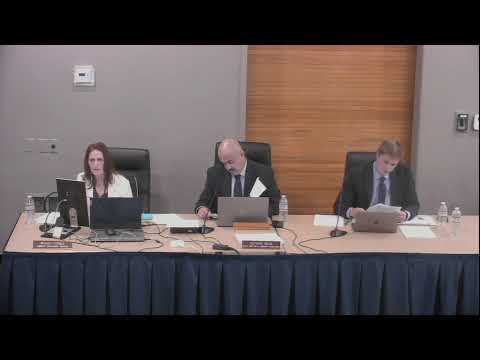
The Planning Commission on April 14 voted unanimously to forward amendments to the mixed‑use overlay district (MUAD) and residential overlay district (ROD) to the City Council so Rancho Palos Verdes' implementing zoning ordinances conform with recent appellate guidance.
Background: the April staff report cited the New Commune DTLA LLC v. City of Redondo Beach appellate opinion (Oct. 10, 2025) and the denial of Redondo Beach’s petition to the state supreme court. That ruling held that overlay zoning that leaves the underlying base zoning able to permit exclusively nonresidential development cannot be counted toward certain lower‑income housing mandates in Government Code §65583.2 unless the mixed‑use site also (a) allows 100% residential use and (b) requires residential to occupy at least 50% of total floor area of a mixed‑use project.
Staff therefore proposed text amendments to the MUAD and ROD to make the overlays applicable to all new development and additions in the districts, to permit up to 100% residential use in those overlays, and to require a minimum of 50% of gross floor area in a proposed new mixed‑use project or addition be residential. Staff said those changes are intended to preserve the city’s housing‑element site inventory against successful legal challenge under state law.
Commissioners discussed whether allowing up to 100% residential use could, in practice, risk loss of commercial space in those overlay areas, and whether the city should consider incentives to preserve street‑level commercial where desired. Staff noted the change responds to state statutory interpretation and is designed to ensure the city's inventory satisfies the state requirements.
The commission unanimously adopted a resolution recommending Council adoption of the code amendments and transmitted the proposed ordinance for first reading.